Product Overview
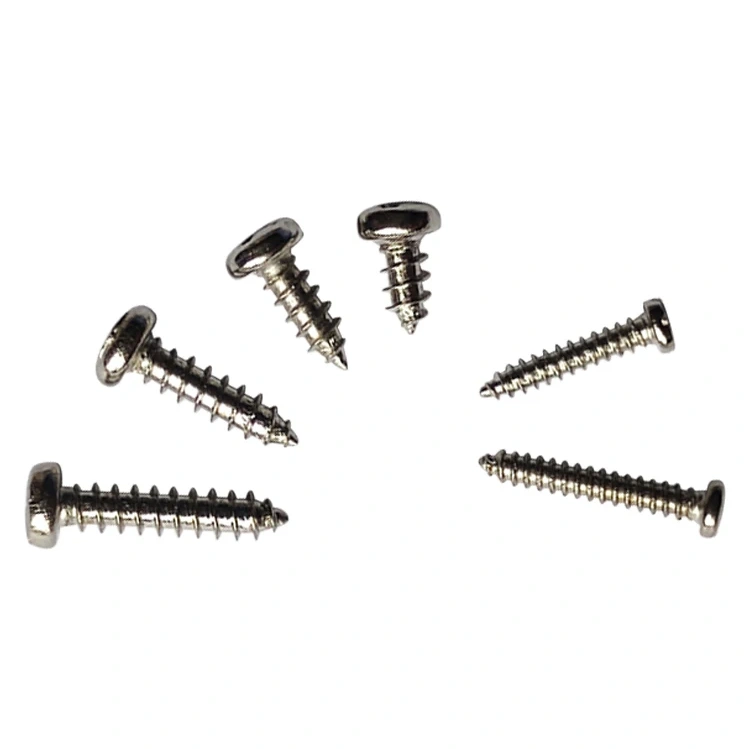
CMH socket head cap screws are the small metal fasteners that hold a model together where a screwdriver will not reach. Each one has a cylindrical cap head with a hexagon recess machined into the top, so it is driven with a hex key or a ball driver rather than a cross-head or flat blade, and the head stands proud of the surface where you can get at it. The range runs from CMH2.2 up to CMH5 in silver, black and bronze, with full-thread and half-thread versions, so the same head style covers everything from a micro hatch fixing to a heavier mount point. These are the fixings that hold down cowls, hatch covers, equipment bays, servo plates and bracket work on rc airplane parts, and the same screws appear on drone frames and on model cars and boats wherever a compact metal fixing is needed.
We keep them for bench work and model maintenance rather than large box quantities. Sizing decides the purchase: the size table below lists every specification we hold by item number. That number is what we pack, and it is what you receive again on a repeat order. If you buy rc airplane parts online, treat the item number as your reference rather than the photograph — a 12 screw and a 20 screw look almost identical on screen.
Specifications
| Item No |
Size (mm) |
| 017-00147 |
CMH4×20 silver inner hexagon screws |
| 017-00148 |
CMH4×30 half thread |
| 017-00149 |
CMH4×45 half thread |
| 017-00150 |
CMH4×60 half thread, thread length 21 |
| 017-00151 |
CMH5×30 half thread |
| 017-00152 |
CMH3×35 silver |
| 017-00153 |
CMH3×40 half thread |
| 017-00154 |
CMH2.2×8 black |
| 017-00155 |
CMH2.5×5 silver |
| 017-00156 |
CMH3×8 silver |
| 017-00157 |
CMH3×6 |
| 017-00158 |
CMH3×12 bronze |
Finish, Thread & Pack Options
- Silver finish — a bright, machined metal surface that sits naturally against aluminium brackets, servo plates and the silver-coloured hardware already on a model.
- Black finish — a dark, matte surface that stays quiet inside black cowls, behind dark access panels and against carbon parts.
- Bronze finish — a warmer tone, useful on scale and vintage-style builds where bright metal would stand out.
- Full thread — the thread runs along the whole shank, which is what you want where the screw passes through a thin bracket, a ply plate or a nut.
- Half thread — a plain shank with a shorter threaded section; the threaded length is stated against those item numbers in the size table, so check it before ordering if the screw sits inside a thick block.
- Pack size — 5 screws of one specification. A pack never mixes sizes, thread types or finishes, so you order exactly what the job needs.
- Finish follows the item number — silver, black and bronze are not free choices on every size. The size table shows which finish each specification comes in, so order by item number rather than asking for a size in a colour.
- Made for repeat orders — because size, thread and finish are fixed to the item number, these are dependable rc replacement parts: the same number brings back the same screw for a repair or a second model.
- Buying in quantity — shops and clubs that buy rc airplane parts in assorted hardware often find it quicker to order a few packs of their most-used sizes than to sort through a mixed lot.
Measuring, Matching & Fitting
- Measure across the threads of the screw you are replacing with calipers; that reading is the thread size.
- Measure from under the head to the tip — that is the length figure, and on rc airplane accessories it is the measurement people most often get wrong, because the head is easy to include by mistake.
- Check the old shank. If the thread stopped short of the head, order a half-thread listing; if it ran the whole way, take a full-thread one.
- Read the item number from the size table and note the finish beside it. Manual measurement on screws this small varies by 0.1–0.5, so the old screw is a better reference than a photo.
- Check head clearance. A cap head stands above the surface, so if the original fixing was countersunk, make sure there is room for a taller head.
- Start the screw by hand and seat the hex key fully into the socket before turning — a key that is only part-way in is what rounds the recess.
- Snug it down until the part is held firmly, and no further; foam, balsa and thin plastic threads strip easily, and a stripped hole is harder to deal with than a slightly loose screw.
- If you found a size while buying rc airplane parts online, cross-check the figures against this table before ordering, since two listings that look alike can be different lengths.
Typical Fitting Points
- Cowls and hatch covers — the everyday job on electric fixed-wing models, where a few screws hold a cowl or hatch that comes off at the field.
- Equipment bays and radio plates — cap heads are easy to reach when you are swapping a receiver, moving a battery plate or re-routing wiring.
- Engine mounts and firewall brackets — the larger sizes suit the heavier fixing points on nitro and gas models.
- Landing gear and wheel hardware — gear blocks, strut clamps and wheel fixings, where the screw has to take the knocks of every landing.
- Drone frames and multirotor builds — one hex key covers the whole frame, which keeps the tool kit on the bench small.
- Repairs after a heavy landing — a handful of screws and a hex key is often all a rebuild needs to get a model flying again.
- Between them these are the small fixings that hold rc airplane parts together on electric, nitro and gas models alike.
- Because a lost or rounded screw is quicker to swap than to hunt for, these are among the rc replacement parts most builders reorder.
Matched Hardware & Tools
Most builds need more than one kind of small part, and the rest of the range covers the pieces that usually go with a set of screws. For nitro and gas models there are 1 pair adjustable engine mounts, 20–180 class, for methanol and gas engines, and a silicone exhaust end deflector that fits over the outlet to carry exhaust away from the airframe. Where a hatch or cover has to come off by hand at the field, 10 pcs M6 threaded nylon thumb screws in L30–75 lengths do the same job as a screw and key, without the tool. For linkages, the tube bender handles tubing and rod in 3.2, 4.0 and 4.7 sizes so pushrods can be shaped to length on the bench.
Between them these are the rc airplane accessories that turn a rebuild into one order instead of three. If you are matching parts for a new kit, send us the model and the sizes you are working to and we will check that the threads line up before you buy.
Ordering & Delivery
- Take the item number and the size beside it from the table above, and check which finish that specification comes in.
- Confirm the thread size and length against the screw you are replacing before you order; that check is what keeps a repair from stalling at the bench.
- Add one pack for every specification you need — a model that uses three sizes needs three packs.
- For trade quantities, send us the item numbers and quantities and we will confirm dealer terms and pricing with you. Shops, clubs and dealers buying rc airplane parts in volume usually take several packs of each size.
- We confirm the order, and the usual turnaround is 24–48 hours.
- Packs are bagged and labelled by item number so several sizes stay separate and countable in transit.
- Repeat orders are simple: quote the item number and the same screw comes back, which is why every specification is listed individually for anyone buying rc airplane parts online.
- If you need a length or a size that is not listed, send the drawing or the dimensions and we will check what can be made to your specification — custom parts are produced to the buyer's drawing across our model aircraft parts range.
Material & Strength Grade
Every screw in the range is metal, with a cylindrical cap head and a hexagon recess machined into the top, and we list them as high-strength socket head screws. The head and the socket are the same from CMH2.2 up to CMH5; what changes across the twelve item numbers is the thread size, the length and the finish. Silver, black and bronze are the finishes we hold, and each item number comes in one of them.
There is no grade mark on these fasteners, and we do not publish a strength class, a load or fatigue rating, a plating thickness or a material certificate for any of the sizes. That is the honest picture, and it settles where they belong: inside a model, on the everyday fixings that hold rc airplane parts together on the bench, they do what they were made for. For a full-size or manned aircraft, a certified structural joint, or a job where a third party has to sign off against a standard, they are not suitable, and we would rather tell you before you order than leave you to find out later. If a build does need written detail — dimensions, item numbers, what a specification is made from — ask us and we will confirm what we can for the sizes you are using.
Clearance Holes & Thread Fit
- Work out what the screw threads into. A nut, a threaded insert or a threaded metal bracket fixes the thread size; the hole in the part the screw passes through only has to clear the shank.
- Measure the hole, not just the old screw. On a model that is already assembled, the hole is the one you are keeping, and a shank that has to be forced through means the hole is undersized or burred at the edge.
- A clearance hole for the shank is a little larger than the thread size; if you are drilling the part yourself, go a size up and test the screw rather than drilling to the thread size.
- Into balsa, foam and soft ply there is no thread to match. Drill a pilot hole slightly smaller than the screw, run a drop of thin CA into it and let it cure before fitting — the hardened wall gives the thread something to bite instead of stripping out on the first turn.
- Watch the depth. A screw that is too long bottoms out in a blind hole or comes through the far side of a thin skin, so check whether the extra length sits in solid material or in open space.
- Aim for real engagement. A screw held by a thread and a half feels tight and then strips the first time it takes a load; where only a short length can bite, look at the half-thread sizes, whose threaded length is stated in the size table.
- If a hole has already stripped, a longer screw that reaches fresh material is usually a better repair than a bigger screw forced into the same worn hole — a common situation when you are repairing model aircraft parts after a heavy landing.
- If a hole is past saving, a threaded insert or a nut on the far side of the material gives the screw something solid to hold, instead of relying on the airframe itself.
Retention & Refitting
- Judge each screw by its socket before you refit it. These come out and go back many times in a season, and the recess wears with the number of times a key goes in and out rather than with flying hours, so the screw you drive most often is the one that fails first.
- Refit while the recess is still crisp and a key bites with no rock in it. Replace the screw once the hex has started to round, the head has been chewed by a slipping key, the threads show flat spots from being pulled through soft material, or it has been lost in the grass — a 5-piece pack exists for exactly that reason.
- Keep a spare pack of your most-used sizes in the field box. A worn screw swapped at the bench costs nothing; the same screw rounded at the field ends the session with a hatch you cannot close.
- Check nitro and gas models before every session. A running engine shakes the cowl, engine mount, muffler strap and gear fixings harder than an electric airframe is shaken, and vibration is what backs a screw out of a hole it has held for twenty flights.
- Re-check the same points after the first flight of a new model, after a heavy landing and after any repair. Walking the cowl, hatch, mount and gear fixings with one hex key takes a minute, and a fixing that has moved once will usually move again.
- On metal-to-metal threads that keep backing out, a medium-strength threadlocker on the thread is the usual answer, and it still releases to a key when the screw has to come out. Keep it off foam, off plastic and off the nylon thumb screws used on some hatches.
- No threadlocker will rescue a worn hole. If the thread in the material has gone sloppy, the holding fix is mechanical: more thread engagement, a longer screw, or a nut or threaded insert on the far side of the part.
- Keep a hex key and a spare pack with the rest of your rc airplane accessories and a repair at the field stays a five-minute job rather than a reason to pack up.
Scale & Supply Capability
Compo RC is part of Haoye Model, working in RC accessories since 1999 — 25+ years of experience, an ISO 9001 certification dating back to 2002, and 1,200+ dedicated moulds behind the range. A 6,000 m² production base and a catalogue of 3,000+ items mean you can source the many small parts a build needs from one place. Need a size we don't list? Send your drawing and we'll make it to your specification. Unsure whether something will suit your build? Our team will help you check before you order.
FAQ
Q1. What do the CMH size codes mean?
CMH is the code we use for this socket head cap screw family. The first figure is the thread size and the second is the length, so CMH3×12 is a 3 thread, 12 long. Half-thread versions are marked that way in the size table, along with the threaded length where we state it. The same numbering runs through the rest of the hardware we list for rc airplane parts, so a size you have used once is easy to find again.
Q2. How tight should I tighten them, and how do I stop them working loose?
Tighten until the head seats and the part is held firmly, and no further. We do not publish a torque figure for these fasteners, so if your build needs a specific value, ask us before you order. A small amount of medium-strength threadlocker on metal-to-metal threads helps, but keep it away from plastic and foam. Models with a running engine vibrate more than electric ones, so check the fixings after the first flights — that is the habit most builders rely on with rc replacement parts that see regular use.
Q3. Will a socket head screw fit where a cross-head screw came out?
It will, provided the thread size and the length match — only the driving recess changes, and you will need a hex key instead of a cross-head driver. Check the head clearance as well, since a cap head stands taller than a countersunk screw. On model aircraft parts that come apart at the field, a socket head is easier to live with because the key does not slip out of the recess the way a worn cross-head driver does.
Q4. Which sizes should I keep as spares?
A pack of each size your model uses most will cover a season of flying, plus one size either side for hatch and bracket work. The screws that fail are usually the ones removed most often, so start with the cowl and hatch fixings and add the engine-mount sizes if you run nitro or gas. Keeping a few of your regular sizes on the bench is how most rc airplane accessories get used — one screw at a time, when a repair cannot wait for an order.
Q5. Are these suitable for anything beyond hobby models?
No. These are hobby-model fasteners, and we publish no airworthiness, load or strength rating for them, so they should not be used on full-size aircraft, manned equipment or anywhere a certified fixing is required. Within a model they do exactly what they were made for. If you are looking to buy rc airplane parts for a plane, a drone or a car, matching the thread size and the length is the whole decision.