Product Overview
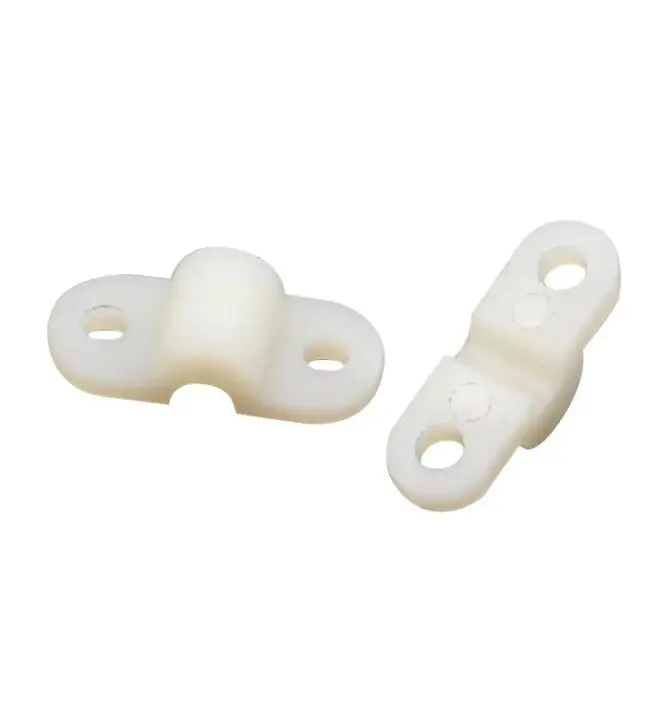
A fixed-wing model flies only as well as the joint between its engine and its firewall, and that joint is a pair of mounts. These adjustable RC airplane engine mounts cradle the crankcase between two matching halves, bolt through the firewall, and hold the thrust line steady through take-off torque, aerobatics and the odd heavy arrival. They suit the way most models are actually built. Builders fitting out a new balsa, ply or composite airframe use them to put the engine exactly where the cowl wants it. Repairers reach for them after a firewall has been crushed or an old mount has cracked at its bolt holes. Anyone moving a model from one engine to another uses them because the beam spacing is set to the crankcase lugs rather than fixed by a hole pattern. That adjustability is the useful part. Four sizes span the fixed wing aircraft range, from small trainers up to large scale models, and each size is tied to the class printed on the plan or the kit box. Read the class, match the size, and most of the guesswork disappears before you pick up a drill.
Nylon Build & Vibration Control
Glow and gasoline engines shake, and the mount is the part that decides how much of that shaking reaches the airframe. A nylon engine mount handles it differently from an aluminium or cast-alloy part: instead of passing vibration straight into the firewall, the material damps it, which is easier on glue joints, on the tank behind the firewall and on the servos and receiver sitting near it. This high strength nylon removes a few familiar metal-mount problems as well. It does not corrode when exhaust residue and spilled glow fuel sit on it, it does not seize its own bolts with white oxide, and it does not conduct, so it stays neutral beside ignition leads on a gasoline installation. For a part of this size it is also light, which matters on models where weight behind the wing has to be paid for somewhere else. The trade-off is heat. Nylon softens before metal does, so route the muffler and the exhaust outlet clear of the cradle and check that gap once the cowl is on. Keep the mount out of a hot car and out of direct sun through a window between flying sessions, since heat and UV are what age it fastest. Bolted to a sound firewall and kept clear of the exhaust, the mount holds its shape through a long run of flying. What it cannot do is make up for a soft or delaminated firewall — the cradle is only as rigid as the plate underneath it.
- Built for methanol. The cradle is sized and shaped for the methanol gas engines used in most trainers and sport models. - Gasoline engines too. Larger scale airframes running gasoline engines use the same mount in the matching size, with no change to the fitting method. - Heat needs managing on gasoline installations. A petrol exhaust runs hotter than a glow muffler, so route the pipe and its outlet clear of the cradle and re-check the gap after the cowl goes on. - Ignition wiring stays clean. Being non-conductive, the cradle does not create an earth path beside ignition leads or receiver wiring tucked behind the firewall. - Sized across the range. From small trainers through mid-size sport models to large scale airframes, there is an engine mount base diameter to match every engine class. - Not for electric power. These are mounts for internal-combustion fixed wing aircraft; electric outrunners use a completely different mounting arrangement.
Size Selection
- Start with the class on the plan. Designers print the class the airframe was drawn around, and that number maps straight onto one of the four sizes — it is more reliable than eyeballing the engine.
- Models near a boundary can go either way. The brackets overlap on purpose, so a model sitting close to a division can use the smaller or the larger size; pick the one that leaves clearance around the crankcase and the muffler.
- Check the engine mount base diameter against the firewall plate. The round base is what sits on the ply; if it overhangs the plate or crowds the tank bay, step down a size.
- Height sets where the engine sits. A taller mount stands the crankcase further off the firewall; test the cowl you intend to use before you commit.
- Big-block engines want the bigger bracket. A large-displacement glow or gasoline engine is better carried on the next size up than squeezed into a smaller cradle.
- Swapping engines? Size from the new engine. Take the class of the engine going in, match it, and then re-check the firewall rather than reusing the old mount's footprint.
Specifications
| Attribute | Detail |
| Mount type | Adjustable beam mount |
| Configuration | Two matching halves per pack |
| Small | 45 mm base diameter, 73 mm height — class 20-48 fixed wing |
| Medium | 50 mm base diameter, 80 mm height — class 40-70 fixed wing |
| Large | 60 mm base diameter, 110 mm height — class 60-120 fixed wing |
| Giant | 65 mm base diameter, 130 mm height — class 120-180 fixed wing |
Installation & Alignment
- Bolt the two halves loosely to the engine first, off the model, and set the beam spacing to the crankcase lugs so the engine sits flat and square.
- Offer the whole assembly to the firewall and slide it side to side until the spinner backplate is centred in the cowl opening.
- Mark the firewall through the base holes, then take the engine and mount off before drilling.
- Drill the firewall and bolt the mount down evenly, working in a cross pattern so the high strength nylon base seats flat against the plate.
- Check the thrust line against the plan and correct it with thin shims behind the base rather than by forcing anything into line.
- Refit the engine, run it up on the ground at low power, and re-check every bolt while the RC airplane engine mounts are still cool.
Care & Inspection
After a normal flight there is little to do beyond a wipe down. After a hard landing, look at the mount before you look at anything else. High strength nylon fails in a recognisable way: the material whitens or crazes around a bolt hole before a crack appears, and a crack usually starts at a corner of a base hole and runs outward. If you see either, swap the nylon engine mount out — a repaired cradle is not worth the risk on the next flight. Check the firewall bolts and the two engine bolts at the same time. A loose bolt lets the mount work against the plate, and that wears the hole oval long before the material gives up. Wipe off spilled fuel and the oily residue that methanol gas engines leave before the model goes back in the car, and give the mount a quick look whenever the cowl is off for another reason. A spare pair in the field box turns a cracked mount from a lost weekend into a ten-minute repair, which is why a second set is worth carrying if you fly the same model every week.
Ordering & Delivery
- Ask before you drill. Send us the model's class and the engine you intend to fit, and we will tell you which bracket we would use. - Building more than one airframe? Extra pairs of adjustable engine mounts can be added to the same order; ask us about quantity before checkout. - Payment and delivery. Payment methods, delivery charges and the current lead time are confirmed at checkout or with our sales contact before dispatch. - Combining an order. If you are also buying a tank, throttle linkage or firewall hardware, ask us to combine the items into one shipment. - On arrival. Check the size and the number of pieces against your order before you start work on the airframe.
Scale & Supply Capability
We serve RC flyers who need the right fit, not a guess. Our catalogue spans a broad spread of sizes, hole layouts, colors and pack quantities, so a first-time builder repairing a foam trainer and an experienced modeler finishing a scale fixed-wing can both find what they need in one order. Each item is shown with its actual dimensions and weight, sets arrive complete with the hardware they include, and our team can help you match parts to your airframe before you order.
FAQ
Do I receive two mounts or one?
One pack contains a matched pair — the two halves that cradle the engine and bolt through the firewall. Fixings for the engine and for the firewall come from your own hardware box, sized to the airframe you are building.
Which size fits a model designed around a .40 to .46 engine?
That falls in the small bracket, listed for class 20-48 fixed wing aircraft. Check the engine mount base diameter and height of that size against your firewall plate and cowl before ordering, and step up to the medium bracket if you have a large-displacement engine or a roomy nose.
Will it take a gasoline engine as well as a glow engine?
Yes. These RC airplane engine mounts are made for both methanol gas engines and the gasoline engines used in larger scale models. The fitting method does not change, but with gasoline you should route the exhaust clear of the cradle and re-check the gap once the cowl is fitted, because petrol exhaust runs hotter.
Can I change the thrust angle after the mount is bolted down?
Adjustable engine mounts let you set side-to-side position freely before the firewall is drilled, and small thrust-line corrections afterwards come from thin shims behind the base. Plan the large adjustments for the dry-fit stage, when the spinner can still be centred in the cowl opening without touching the firewall holes.
How tight should the mounting bolts be?
Snug, with a washer under every head. This nylon engine mount compresses if a bolt is crushed down onto it, and a compressed base loses the flat face it needs against the firewall. Tighten evenly across the base, then check the bolts again after the first ground run when everything has settled.
Can I fit this mount to a composite or thin firewall?
Yes, the mount only needs a flat plate to sit on. On a thin ply or composite firewall, spread the load with a washer under each bolt head or a small backing plate on the inside face, and check the plate for delamination around the holes before you tighten anything down.