Product Overview
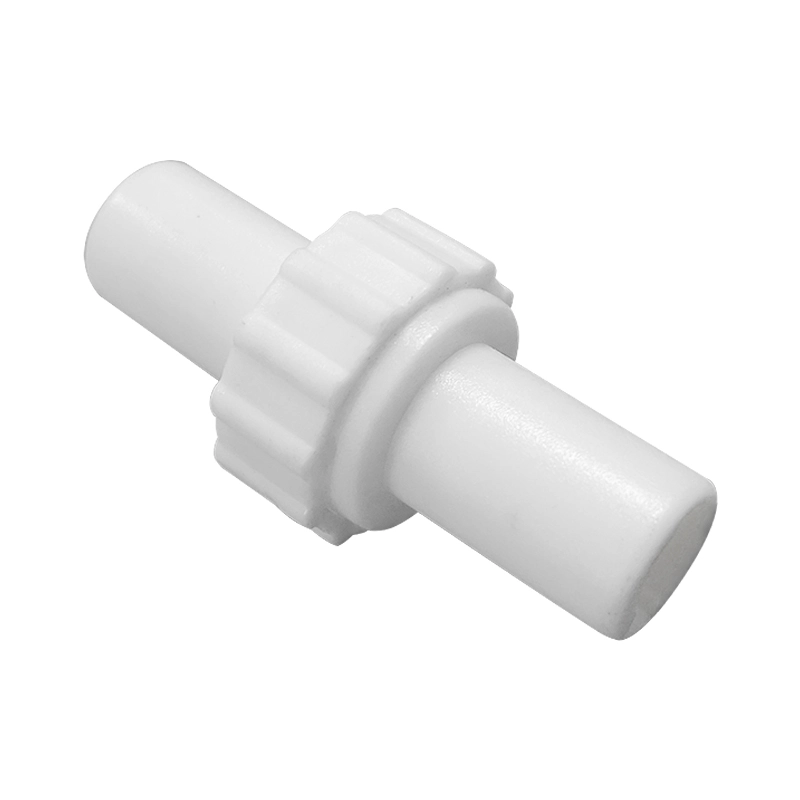
A three-way T connector for the fuel and air lines inside a model aircraft, supplied five to a pack. One port takes the feed and the branch splits it two ways, or two lines merge into one — whichever way your plumbing has to run. The ports are push-in, so tubing goes straight on out of the packet: no clamps, no ferrules, no tools. Push the tube in until it seats, and press the collar when you want the tube back out.
Two bores are available, Φ4 and Φ6, which means the same connector covers a slim feed line to a small glow engine and the fatter line on a larger gas model. Both sit on a compact moulded T body that lies flat inside a busy fuselage, and both are stated airtight in service — the whole point of the part, since a joint that weeps puts fuel and air where they do not belong.
The body is moulded plastic rather than metal, so the joint stays light at the end of a line and there is no hard metal edge chafing against foam or balsa. Inside each collar a small grab ring does the holding; the collar is what releases it.
For anyone plumbing or repairing a model, this is the cheapest part of the job and often the one that decides whether the system runs cleanly. Model airplane parts at this level are rarely the expensive item in a build, which is why it pays to keep a few in the drawer — and a 5-piece pack of each bore is an easy line to hold for anyone selling rc airplane parts online.
Specifications
| Product type |
T-type 3-way quick connector |
| Use |
3-way branching of model fuel and air lines |
| Ports |
Three |
| Connection |
Push-in quick plug |
| Tools required |
None |
| Flow direction |
Any port can take the feed; the other two split or merge |
| Body |
Compact moulded T body, plastic |
| Body form |
Symmetrical, with no marked inlet or outlet |
| Release |
Press the collar to withdraw the tube |
| Working media |
Model engine fuel lines and light pneumatic air lines |
| Tubing type |
Flexible model fuel and air tube |
| Mounting |
Sits in line on its own; no bracket or clip needed |
Fuel And Air Line Applications
- Splitting one tank feed to two carburettors. On a twin-engine model a single line leaves the tank and has to reach two carburettors; the T does that split in the space of a thumbnail, one port in and two out.
- Filling and feeding through one line. Where the filler and the feed share a route to the tank, a branch lets one tube carry fuel in while the other keeps feeding the engine.
- Branching an air line. The same fitting splits a pneumatic or air circuit that has to reach two points from a single source.
- Repair-bench rebuilds. After a crash or a hard landing the connectors are usually replaced first — a pulled-off line, a split tube end, or a joint that has sat in fuel for a season. It is a part worth having in the spares drawer of a club or workshop that keeps rc plane parts on hand.
- Plumbing rework. Extending a short line, routing it around a new tank or adding a branch to a run that already exists are all the same job with this connector.
- Kits and short production runs. Kit assemblers and small workshops that buy rc airplane parts in quantity plumb every airframe in a run the same way, with the same connector and the same bore throughout.
- Retail stock. Small, light and normally used one or two at a time, so a shop can carry both bores without tying up shelf space.
Φ4 And Φ6 Variant Dimensions
| Property |
Φ4 version |
Φ6 version |
| Part code |
011-04601 |
011-04602 |
| Inner diameter |
Φ4 |
Φ6 |
| Matching hose inner diameter |
4 mm |
6 mm |
| Overall length |
37 mm |
40 mm |
| Body height |
24 mm |
26 mm |
| Body style |
Same compact moulded T body for both bores |
Same compact moulded T body for both bores |
| Pack quantity |
5 pcs |
5 pcs |
| Dimension tolerance |
Nominal figures; slight measurement variance possible |
Nominal figures; slight measurement variance possible |
Choosing Between Φ4 And Φ6
- Measure the bore of your line, not the outside of the tube. The bore is the inner diameter — the hole the fuel actually travels through.
- Match that measurement to the connector. There is nothing between the two sizes, so measure rather than estimate.
- Check the space around the joint. The larger bore body is a little longer and taller, which matters behind a firewall or inside a tight cowl.
- If two different line sizes run in the same model, order one pack of each bore instead of trying to make one size fit both.
- Order by bore, not by model. Guessing from a photo is the mistake we see most often in rc airplane parts online orders — a picture shows the shape of the connector, never the diameter of your hose.
Pairs Well With
A fuel-line job rarely stops at the connector. These are the pieces that usually travel with it.
Adjustable engine mounts (20-180 class). For the glow and gas engines sitting at the other end of the line — the mount holds the engine while you route the feed past it.
Fuel tanks and tank accessories. The line starts at the tank, so a T only earns its place once the tank and clunk are fitted.
Silicone exhaust deflectors. In a cowled model exhaust oil drifts onto everything nearby; a deflector keeps it away from the area you have just plumbed.
M6 nylon thumb screws. Cowls and hatches that come off at the field are far easier to live with when they open without a screwdriver — useful when you are checking a line between flights.
Tube benders (3.2 / 4.0 / 4.7 mm). For short rigid runs that sit alongside flexible tubing, a bender gives you a clean bend without collapsing the tube.
It all comes off the same rc model parts shelf, which is why shops and workshops that regularly buy rc airplane parts tend to put the whole list on one order.
Installation And Leak Check
- Cut the tube square with a sharp blade. The fitting grips the outside of the tube, so a flat, clean end is what lets it seat.
- Push the tube into the port until it stops. You should feel it bottom out; if it keeps going, the end has not entered straight.
- Tug the tube gently to check the grip. If it slides back out, cut the used section off and push it in again — a compressed end will not grip twice.
- Route the line so it does not pull tight across the fitting, and keep a hard kink away from the port.
- Run the system on the bench before you close the hatch. Prime or pressurise it, wipe the joint dry and watch for weeping, then check it once more after the first flight.
- To remove a tube, press the collar down and pull straight out. The connector can be reused with a freshly cut end.
- Keep a pack in the field box. These are the rc model parts that tend to let you down at the strip rather than at the bench, and swapping one takes seconds.
Ordering And Delivery
- Pick the bore at checkout. Each pack holds five connectors of a single bore, Φ4 or Φ6. Need both? Order one pack of each.
- Order by inner diameter. The hose bore decides the fit, not the model, so note the measurement before you choose a size.
- Lead time: 24-48 hours.
- Packing. Five connectors arrive in one small bag; tip them into a compartment box for bench stock so the count stays right.
- Adding to an open order. Small and light, so it travels with the rest of your purchase — mention it to your sales contact if you want it added to an order already placed.
- Repeat supply. Clubs, workshops and shops that buy rc airplane parts in quantity can ask about keeping both bores on the shelf.
- For online sellers. If you sell rc airplane parts online, a 5-piece pack in each bore is an easy item to keep listed.
- Small parts, small parcels. This connector adds almost nothing to a parcel and rides along with any other rc plane parts on the same order.
Scale & Supply Capability
Compo RC is part of Haoye Model, working in RC accessories since 1999 — 25+ years of experience, an ISO 9001 certification dating back to 2002, and 1,200+ dedicated moulds behind the range. A 6,000 m² production base and a catalogue of 3,000+ items mean you can source the many small parts a build needs from one place. Need a size we don't list? Send your drawing and we'll make it to your specification. Unsure whether something will suit your build? Our team will help you check before you order.
FAQ
Q1. Which bore do I need — Φ4 or Φ6?
Measure the inner diameter of the line you will fit and match it to the connector; the two are not interchangeable. Because model airplane parts like this are chosen by tubing size rather than by aircraft, measure the hose, not the model.
Q2. Can the same connector be used on an air line as well as a fuel line?
Yes. It is made for three-way branching on both — the feed and vent lines of a fuel tank, and air circuits that have to reach two points from one source. It is a model fitting, so keep it to model fuel and air systems rather than full-size or industrial plumbing. Like most rc plane parts this size, it is worth keeping one for the fuel side and one for the air side of the same model.
Q3. Can I link two connectors to get more than three outlets?
You can. Feed the branch port of one connector into the inlet of a second and you gain three outlets plus a through line. It costs a little more space inside the fuselage, and every extra joint is one more place to check for weeping, so keep the run as short as your layout allows.
Q4. Will one pack of five cover a single model?
For most installations, yes — a typical set-up uses one connector at the tank and sometimes a second on a vent or fill line. The remaining three are spares, which is worth having: keeping a spare pack with the rest of your rc model parts in the field box is the easiest way to avoid losing a flying day to a pulled-off line.
Q5. Will it hold up with methanol or petrol fuel?
These connectors are used on model fuel lines and air circuits generally, in glow and gas models alike. If you run an unusual mix, or a fuel with added solvent, fit one spare connector on a short length of your own tubing first and leave it with that fuel for a while before you plumb the tank.
Q6. How much deviation should I allow for on the stated sizes?
The figures are taken by hand, so allow a small tolerance on the length and height. The bore is the number that decides the fit: if your hose measures a little under or a little over the stated bore, tell us the measurement and we will confirm which of the two sizes to take.