Product Overview
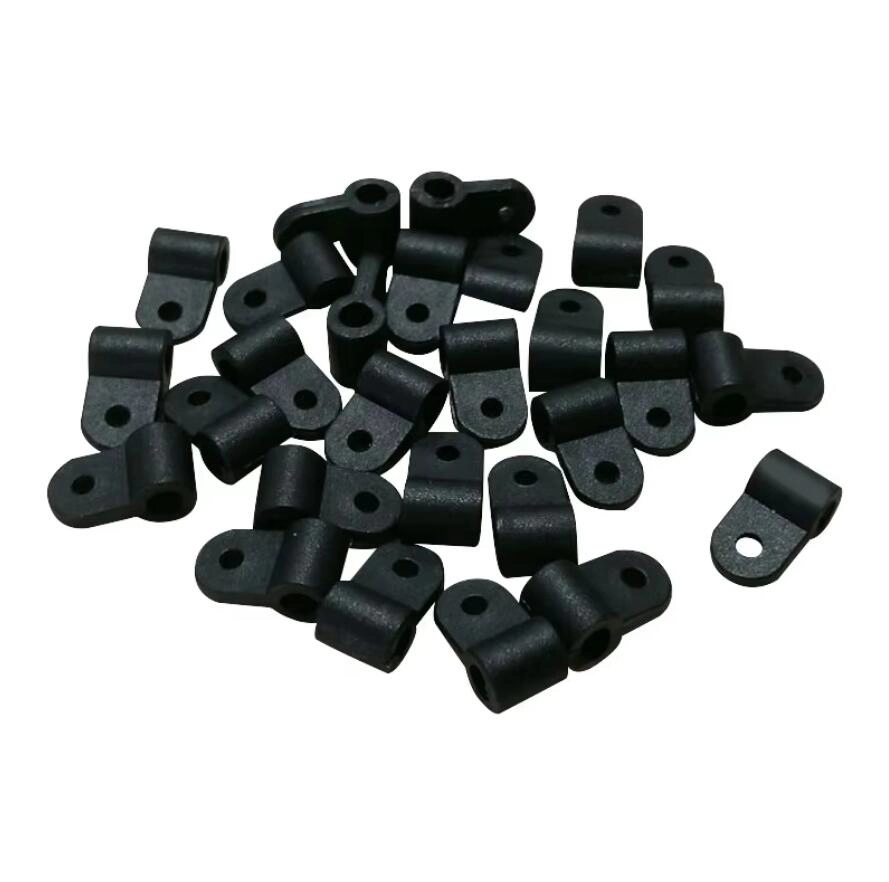
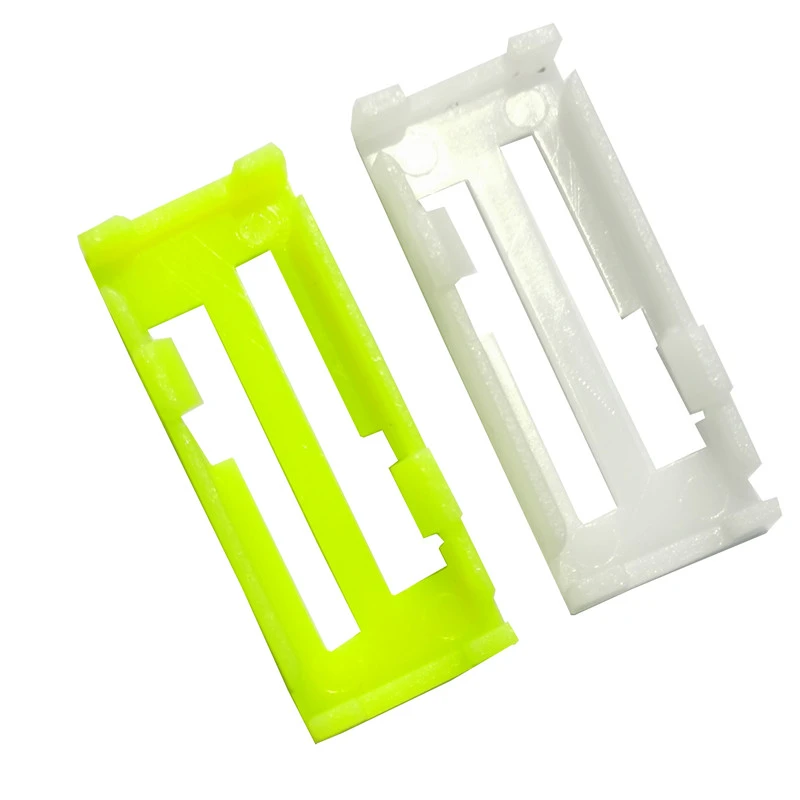
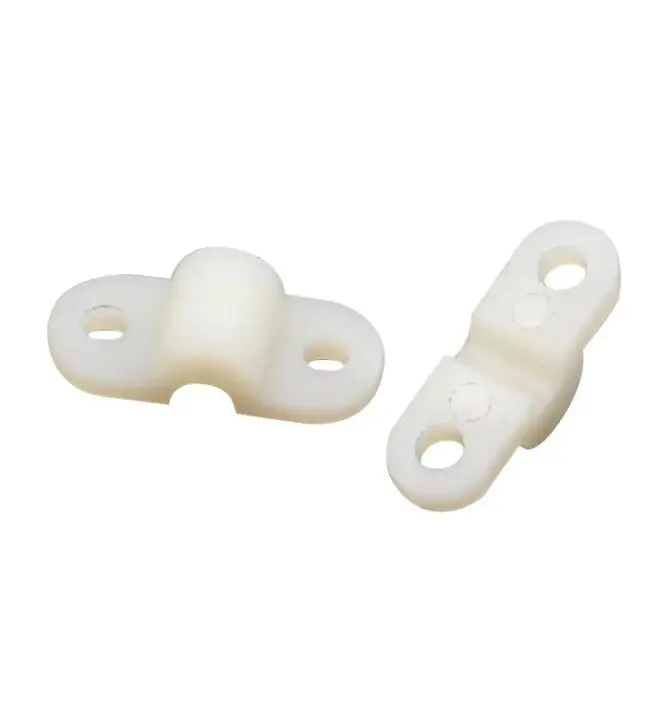
Canopy hatches take more opening and closing than almost anything else on a foam electric model, and the small catch that holds them shut is usually the first part to give trouble — a tab cracks, a pin wears loose, or the whole latch disappears into long grass after an awkward arrival. This set replaces that catch in one go. Each unit is the 30 mm body in our moulded canopy latch family, measuring L30 × W12.5 × H6 mm with a bolt hole through its mounting face, which makes it the RC canopy lock to reach for when a shorter catch will not span the gap.
The body carries a long pin out of one end and a short cross pin running across it, with a recessed channel along the face and moulded holes through the body. That arrangement is what makes a hatch feel properly located rather than merely closed: the long pin engages the frame at the front edge, the cross pin keeps the body from turning as the screw tightens, and the mounting hole lines up with the fixing already on your model.
Builders keep these on the bench because a broken catch costs an afternoon of flying rather than a lot of money. Shops and clubs that buy RC airplane parts in batches hold both colourways, since the right choice depends on the inside of the hatch rather than the outside of the model.
It replaces the original moulded catch on most foam electric hatches and works with the screws, hinges and horns the model already carries instead of demanding a new fixing arrangement. Building a hatch from scratch is just as straightforward — the mounting hole takes the small screw you would normally use for a ply tongue or a plastic catch, and the pins do the rest.
Specifications
| Specification |
Detail |
| Body length |
30 mm |
| Body width |
12.5 mm |
| Body height |
6 mm |
| Bolt hole |
3 mm |
| Pin arrangement |
One long pin out of the front end, plus a short cross pin set at right angles |
| Mounting face |
Recessed channel running along the face, with moulded holes through the body |
| Fixing |
Single screw through the bolt hole; the cross pin stops the body turning as it tightens |
| Fits |
Replaces the original moulded catch on most foam electric hatches, and suits new-build hatch frames |
| Colour options |
White or black |
| Pack quantity |
5 latches |
| Dimension note |
Measured manually; allow 1–3 mm |
| Catalogue section |
011 – Retracts & Undercarriages |
| Part number |
011-01306 |
Latch Length Comparison
- Reach over a deep hatch lip. The 30 mm body is longer than the 26 mm catch in the same family, which is the difference between a latch that reaches a set-back hatch frame and one that barely touches it. If the canopy sits proud of the fuselage or the lip is thick, this is the length to fit.
- A wider bolt hole. The longer body takes a 3 mm fixing where the shorter version uses 2 mm. Check what is already drilled in your hatch frame: if your screw is noticeably smaller than that, you will need to open the hole slightly or step up to a larger fixing.
- A slimmer profile. At W12.5 mm this body is narrower than the 26 mm catch, so it drops into a tight channel between the hatch rail and the fuselage side without foam having to be shaved away.
- When the shorter latch is the better buy. On a small park flyer with a shallow opening and a small fixing already drilled, the 26 mm RC canopy lock is the neater fit. Choose this one when reach, rather than overall size, is the problem.
- Keeping both on the bench. Most workshops end up holding both lengths — the short one for light foam, the 30 mm body for anything with a deeper opening. Ordering RC replacement parts a pack at a time saves a second order later.
- Model airplane parts this small are easy to mix up. Two catches that look identical in a photograph can differ by four millimetres of body and a whole millimetre of bolt hole, so measure your hatch opening before you choose rather than after.
- Buying for stock. If you buy RC airplane accessories for a shop shelf, keep the two lengths on separate hooks with the dimensions written on the label — the difference is invisible on the shelf and obvious at the bench.
Fitting The Latch
- Offer the body up first. Sit the latch against the hatch frame in the position it will finally occupy and check that the long pin reaches the lip it has to hold.
- Fix the side before you drill. Hatches are usually caught on one edge of the opening rather than in the middle, so decide left or right now; moving a pilot hole in foam is far harder than tightening a screw.
- Mark through the mounting hole. The bolt hole in the body face is your template — a fine marker or a pin pushed through it puts the screw exactly where it belongs on the frame.
- Drill a pilot to suit your fixing. Match the drill to the screw your model already uses on that hatch, and keep the hole square to the frame so the body sits flat against it.
- Seat the latch and check the cross pin. The short pin should stand against the frame so the body cannot rotate as you tighten; if it fouls, relieve the frame rather than the pin.
- Tighten gently. A moulded latch body needs very little torque — snug is enough, and leaning on the screwdriver is the quickest way to crack a seat.
- Test the hatch through its full travel. Open and close it several times, check the RC plane canopy latch holds the hatch shut without being forced, then re-check the screw after the first flying session.
Material & Build
Every latch is a single moulded body with a smooth matte surface, a recessed channel along one face and moulded holes through the part. Nothing is glued or riveted on, so there is no added joint to work loose as the hatch is opened and closed. Many model airplane parts in this size range look interchangeable in a photograph; what separates this one is the way the channel and the holes are formed into the body rather than attached to it.
The pins finish in a brass tone against the white or black body — a long pin running out of one end, and a short cross pin across the body. Together they give this RC plane canopy latch two supports register against, which is what keeps the body sitting square on the hatch frame instead of working loose on a single screw.
Both colourways are the same moulding in a different colour, so the choice is purely about what the latch sits against. White disappears into pale foam and an unpainted hatch interior; black suits a dark canopy, a tinted cover or a cockpit area painted black. Look at the inside of the hatch rather than the outside of the model, because that is what you see every time you open it.
Keep the fit simple in use. Snug the screw rather than driving it hard, check after the hatch has been worked a few times that the pins still sit clean and square, and treat the latch as a small consumable — catches like this take the shock of every landing on that corner of the airframe.
Typical Builds And Repairs
- Foam electric trainers. The battery hatch on a trainer is opened before and after every flight, which is exactly the wear pattern this latch is made for. Fit it to the existing screw position and the hatch keeps closing cleanly.
- Scale foam warbirds. Long canopies that hinge at the front and need a catch at the rear are the natural home for the longer body, because the rear edge of the canopy sits further from the frame than a short catch can reach.
- Park flyers with a deep lip. Where the hatch lip is thick or the frame is set back, the extra reach of this body saves reshaping the opening to make a shorter catch work.
- Drone and FPV bay covers. Builders working on FPV frames sometimes use the same catch on a battery-bay or electronics cover; check the pin reach and the fixing against your bay before you drill.
- Crash repairs. A broken catch after a hard arrival is one of the most common RC replacement parts orders on a foam model — the repair itself takes minutes once the latch is in hand.
- Club and training fleets. A club spares box goes through catches faster than any single builder, because every hard arrival on the same hatch ends the same way.
- Retail stock. Shops that buy RC airplane accessories for the shelf like a part that covers several repair jobs and sits flat in a small drawer.
- Volume restocking. Importers and distributors who buy RC airplane parts in case quantities can reorder the same body length and hole size instead of accepting a similar-looking substitute.
Ordering, Packing & Delivery
- Choose the colour. Each pack of five is a single colour, so order the white and the black as separate packs if you want both.
- Check the size against your hatch. Body length and bolt hole are the two figures that decide whether this latch fits; if you are not sure between this length and the shorter catch, send us the measurement of the hatch opening and we will tell you which one suits.
- Set the quantity. Single packs suit a bench, multiple packs suit a shelf. Retailers, clubs and distributors who buy RC airplane parts in repeat quantities order the same specification each time, and we keep it available.
- Combine families if you need to. If you buy RC airplane accessories across several part families, send the whole list in one message so it can be handled in a single conversation.
- Lead time. Orders are normally handled within 24–48 hours, and we confirm stock and dispatch timing when the order is placed.
- Packing. Small hardware like this travels bagged and counted; if you need packs separated and labelled for a stock room or a club spares box, say so when you order.
- Payment, freight and documents. Terms, freight method and any paperwork for larger orders are confirmed with your sales contact, so ask for the details that apply to your destination before you commit.
- Check on arrival. Count the packs against your order as soon as they land and raise anything that does not match before the parts are fitted.
Latch Operation & Mounting
- No servo, no pushrod and no linkage. This is a passive catch: the long pin locates in the hatch lip and one screw through the bolt hole holds the body to the frame, so there is nothing to drive and no extra channel, travel or endpoint to set up on your transmitter.
- The hatch is opened and closed by hand. Press the canopy down until the pin drops into its seat and the hatch sits flush against the fuselage; lift the edge to release it. There is no spring to compress, no catch to trip and no release mechanism to adjust.
- The cross pin is what stops the body turning. With only the mounting screw holding the body, it would otherwise pivot as you tighten; the short pin set at right angles to the long one stands against the frame and keeps the catch square.
- Either side of the opening will take the latch. A hatch is normally caught on one edge rather than at both, but the RC plane canopy latch itself is the same part left or right — decide the side before you mark the pilot hole, because the screw position is what commits you.
- Keep the bolt hole square to the frame. The hole sits in the flat mounting face of the body, so the latch should rest flat with the cross pin touching the frame rather than hovering above it.
- If the hatch will not stay shut, check the pin reach first. A catch that fails to hold is usually a reach problem rather than a faulty part: reposition the body, or move to the shorter 26 mm body in the same family if the opening is shallower than you measured.
Model Suitability & Weight
There is no wingspan or weight class printed on this catch, and none is needed. Judge it by the hatch rather than by the model: measure the distance from the hatch lip to the frame the pin has to reach, and the depth of the opening the 12.5 mm wide body has to sit in. If the long pin spans the lip and the body drops into the channel between the hatch rail and the fuselage side, the latch suits the model — a small park flyer and a larger foam electric airframe both use the same catch when the hatch geometry matches.
We do not publish a unit weight for the moulded latch, and it is not the figure that decides anything here. A small plastic body with two thin pins, sitting at the closed end of the hatch, is not what sets a model's balance. Where grams do matter, it is the machined hardware worth weighing up: our right-angle and straight aluminium canopy locks are the ones we recommend for F3A aircraft and drone bays, with the usual note to take the metal body's weight into account on other models. On an indoor model or a light FPV bay, staying with the moulded catch is the simpler route.
No load, torque or fatigue rating is published for this latch, and it is not sold as a structural fitting. Its job is holding a canopy or hatch shut — closed in flight, open at the field, and snug rather than over-tightened on the screw.
Scale & Supply Capability
Compo RC is part of Haoye Model, working in RC accessories since 1999 — 25+ years of experience, an ISO 9001 certification dating back to 2002, and 1,200+ dedicated moulds behind the range. A 6,000 m² production base and a catalogue of 3,000+ items mean you can source the many small parts a build needs from one place. Need a size we don't list? Send your drawing and we'll make it to your specification. Unsure whether something will suit your build? Our team will help you check before you order.
FAQ
Q1. Which latch should I fit — the 30 mm or the 26 mm one?
The 30 mm body reaches further into a deep or set-back hatch lip, while the 26 mm RC canopy lock is neater on a small park flyer with a shallow opening. The bolt hole differs as well, 3 mm here against 2 mm on the shorter version, so check the fixing already drilled in your hatch frame before you decide.
Q2. Does this latch need a servo or a pushrod?
No. It is a passive catch — the hatch is held closed by the pin locating in its seat and by the screw through the mounting hole. There is no servo, pushrod or linkage to install or adjust, so nothing changes on your radio setup.
Q3. What screw goes through the bolt hole?
The hole measures 3 mm across, so whatever fixing your hatch frame is already drilled for is usually the right one. Offer the screw up dry before you tighten it: it should pass through the hole cleanly without slop, and it should seat the body flat against the frame.
Q4. What is in the pack, and are screws included?
Each pack contains five latches only. Mounting screws are not included, so if you are ordering RC replacement parts for a repair, add the fixings you need at the same time. Keeping one latch back for the field box turns a lost catch into a two-minute fix.
Q5. Can I fit it on either side of the hatch?
Decide the side before you drill, because the screw position is what fixes the latch in place. Most hatches take a single catch on one edge of the opening rather than in the middle; sit the RC plane canopy latch where it needs to go, check the long pin reaches the lip, and only then mark the pilot hole.
Q6. Should I order the white or the black?
Choose by what the latch sits against. White blends with pale foam and an unpainted hatch interior; black suits a dark canopy, a tinted cover or a cockpit painted black. The two colourways are otherwise the same part, and the finish can read a shade lighter or darker on screen than it does in your hand.
Q7. How accurate are the listed dimensions?
All dimensions are measured manually, so allow 1–3 mm of variation from the printed figures — normal for model airplane parts of this size. On a latch this small it rarely changes the fit, but check the bolt hole against your fixing before you drill.