Product Overview
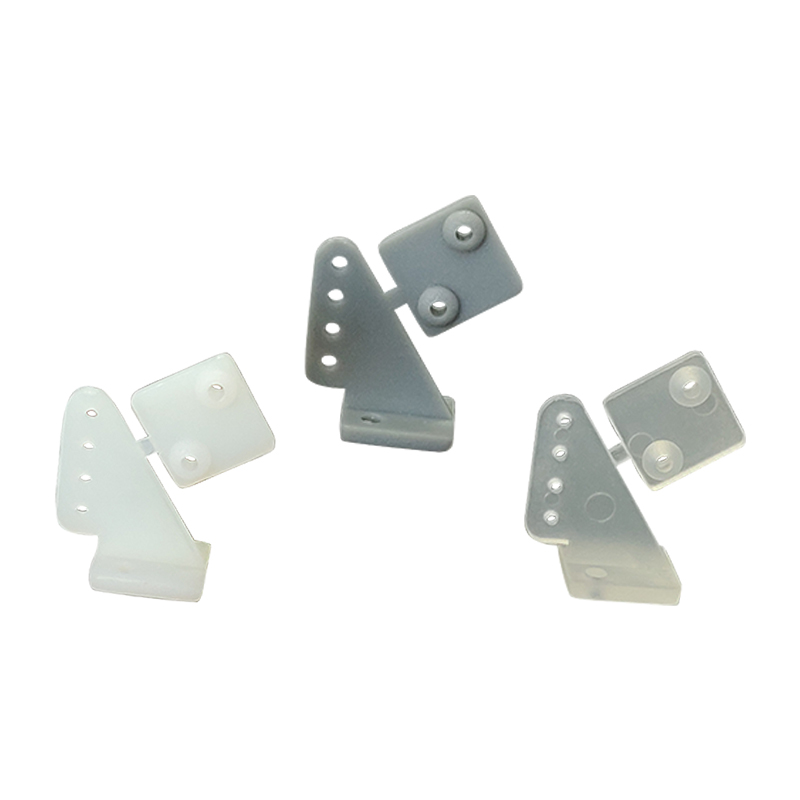
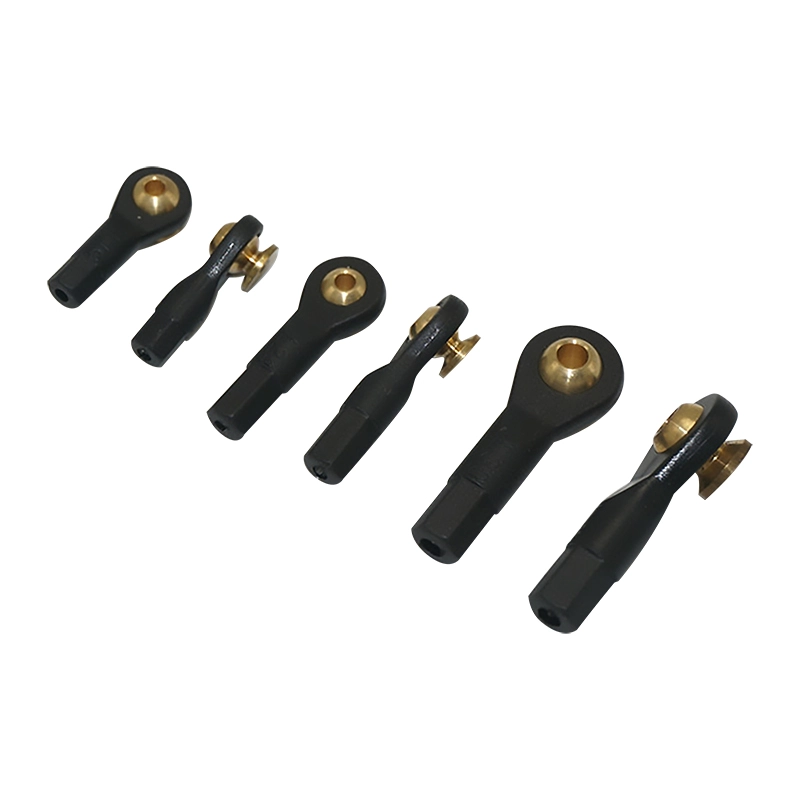
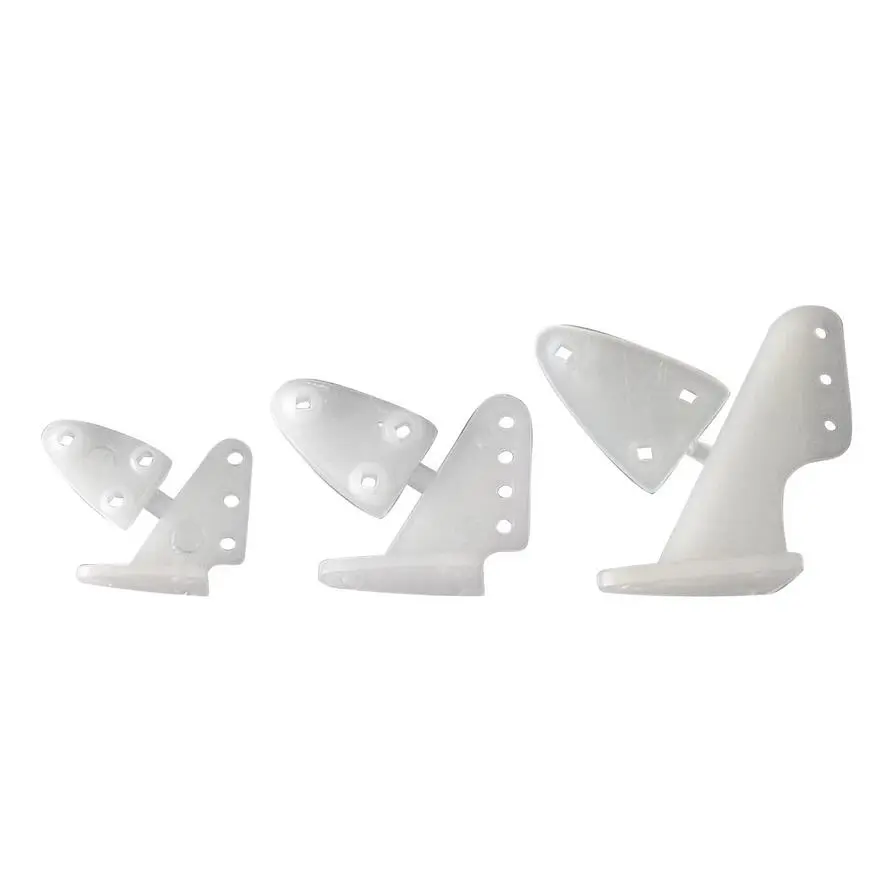
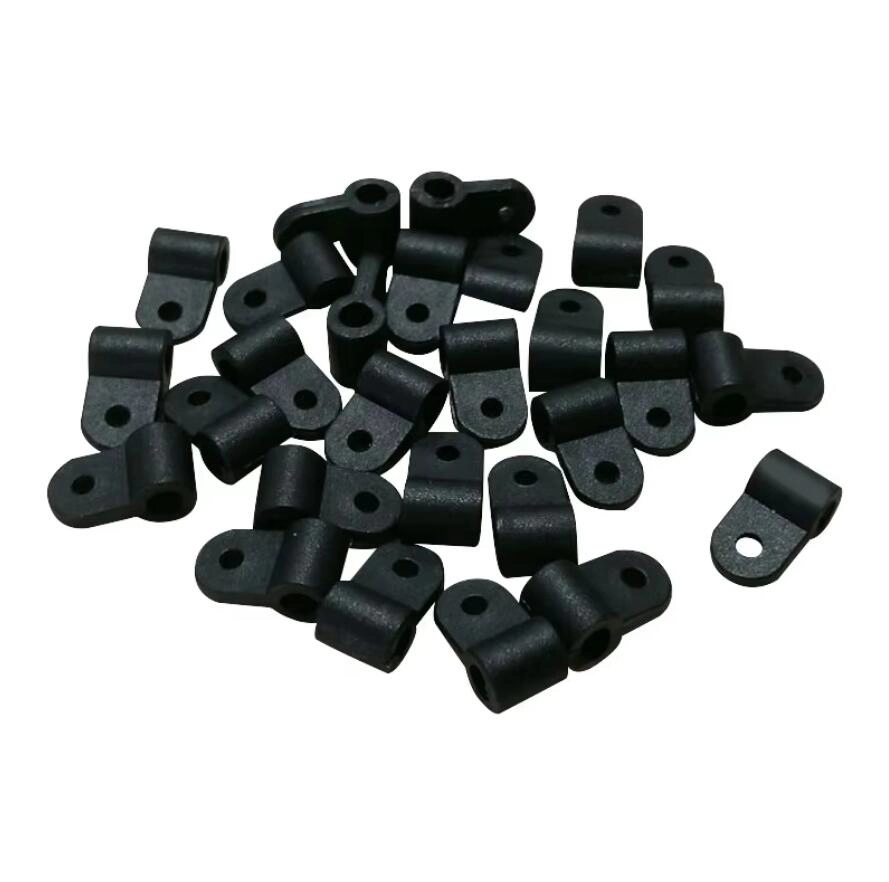
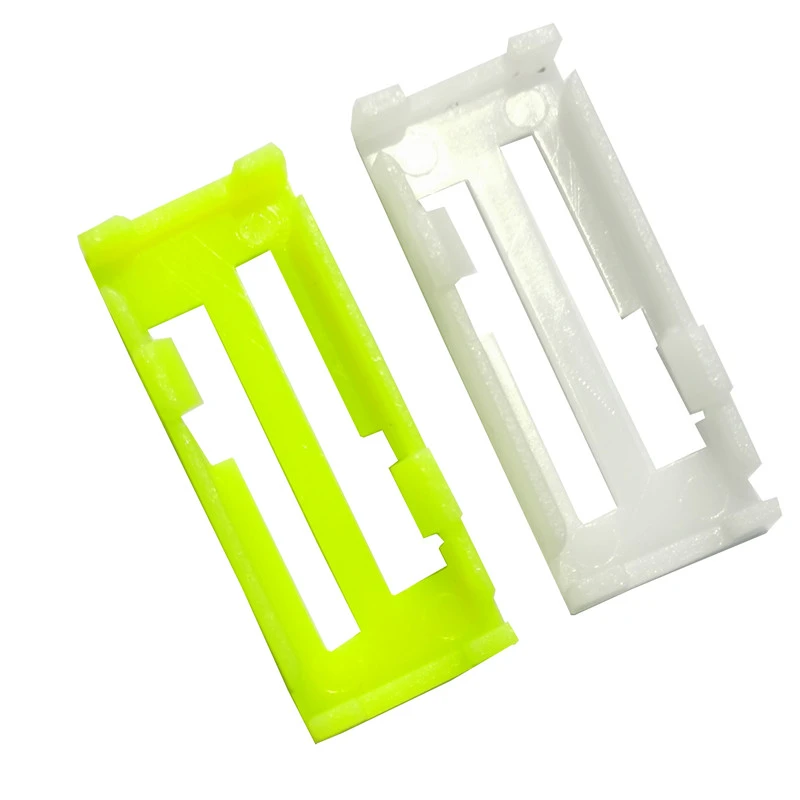
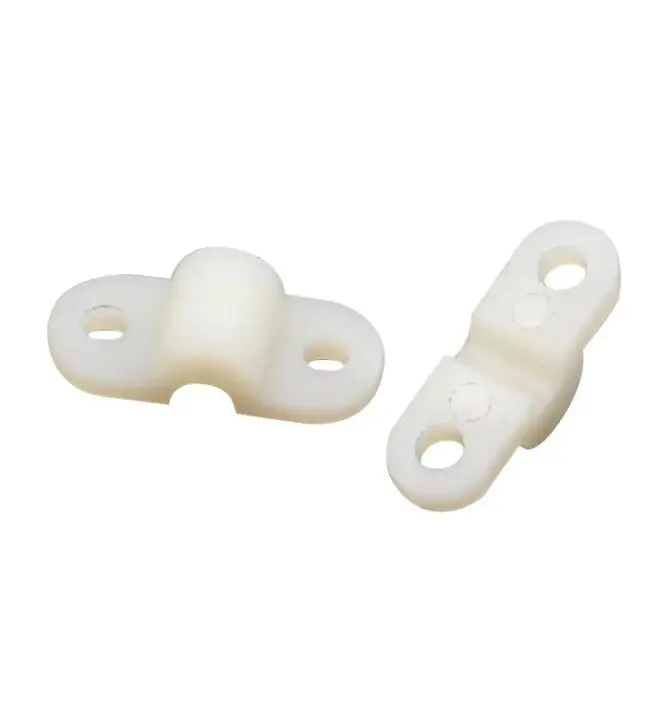
Every control surface on a foam or electric fixed-wing model hangs on a few small parts, and the horn is the one that carries the pushrod load. This pack puts 20 of them on your bench at once — flat, multi-hole horns in three sizes. Each nylon pin horn is a moulded plate with a row of mounting holes, shaped to sit flat against an aileron, elevator, rudder or flap and give the clevis a fixed point to pull against.
They arrive without screws, and that is deliberate. You match the fastener to the airframe in front of you rather than to a bag of hardware that may not suit, which matters when you are repairing one model on Friday and finishing a second build on Sunday. When you buy rc control horns in a set like this, you are stocking the part that fails first — cracked at the mounting hole after a hard arrival, or worn oval where the pushrod has been working — in enough quantity to keep two or three airframes flying through a season.
Each one is a plain rc plane control horn: no adjuster, no ball joint, nothing to set up beyond picking your hole and your fastener. That simplicity is the point on a foam model, where a light flat part does the job without adding hardware at the tail or the wingtip, and where a swap should take a few minutes at the bench rather than an evening.
S, M and L cover the spread from small park flyers up to larger electric scale models, so one line of parts can serve most of the fleet. Multiple mounting hole options extend compatibility with a broad range of control linkages and surfaces, and modular size and color choices maintain a uniform quality standard across varied model needs. The lightweight, tough construction and screw-free integration let users tailor installations and reduce downtime during repairs or upgrades. For personal RC plane maintenance, these horns replace worn or broken components on foam and electric models and help restore control surface function. Their controlled sizing supports precise repair alignment, and compatibility with various fastener types fits existing toolkits to streamline repairs and reduce downtime. In competitive or custom RC model building, these horns offer adaptable control linkage configuration for prototype planes, with consistent quality and customizable mounting. The lightweight yet sturdy nylon supports aerodynamically sensitive models, and the absence of permanent fasteners allows fine-tuning and rapid part swaps during preparation and testing.
Material & Build
Nylon earns its place on this part. It has enough give to soak up the shock that runs down a pushrod on landing, and it is light enough that a horn does not disturb the balance of a small electric airframe. It also wears predictably: a nylon part with a season of flying behind it shows its age as a slightly opened hole rather than a sudden failure, which gives you a warning at the bench instead of in the air.
The holes are formed in the mould rather than drilled afterwards, so their edges stay clean. That matters more than it sounds — a burr inside a hole acts like a file on the pushrod wire, and after a few dozen flights you have play in a linkage that used to be tight. A clean bore keeps the fit snug for longer, and a snug linkage is what gives you crisp, repeatable centring at neutral.
Every nylon pin horn comes off the same production, so the dimensions you check today are the dimensions you get on a reorder: same height and length, same hole spacing, same plate thickness.
That consistency is what lets a replacement rc control horn drop into the model you built around the old one, without opening out holes or shimming the surface.
If your kit manual or your clubmates call these zip horns, it is the same part under a different name — flat plate, single row of holes, clevis sitting proud of the surface.
- A size for nearly every surface — S for tight aileron and elevator positions on small models, M for standard surfaces, L where you want a little more reach. Builders who know these as zip horns will find the same plate shape carried across all three. - Three or four holes to set your throw — moving the clevis in or out changes mechanical advantage without changing the part, and the spare hole gives you somewhere to go when one hole starts to wear. - Nylon that takes a knock — the material has enough give to absorb impact and vibration instead of shattering the way brittle moulded plastics can, which is exactly what you want at the end of a pushrod. - Weight where it matters least — a horn adds so little behind the balance point that a repair or a rebuild does not force you to re-trim or add nose weight on a small electric model. - Flat plates that keep the linkage in line — a horn moulded flat sits square on the surface, so the pushrod runs in one plane instead of binding part-way through its travel. - A pack that covers the fleet — 20 nylon control horns for sale in one set means a repair today, a rebuild next month, and enough left over that the next one is already in the drawer.
Both words land on the same part, and the difference sits in workshop vocabulary rather than in the moulding. A pin horn and a zip horn are flat nylon plates with one row of holes: the plate is fixed down through one hole, and the clevis rides on another, chosen to set the throw. If a plan sheet, kit manual or clubmate asks for zip horns and the bag in front of you says nylon pin horn, you are holding the right part. Where the naming does catch people out is in what the word covers. Some catalogues use "horn" for the plate alone; others use it for a full linkage set with ball, clevis, screw and nut in the same bag. This pack is the plates only, so check what a description includes before you compare it with what you already have on the bench. The holes are clearance holes — no thread, no insert — which is why the plate can be pinned, screwed or bolted depending on what sits behind the surface. On a thin foam skin, add a small ply or plastic doubler behind the horn so the fastener has something to clamp against; without it the foam crushes and the plate starts to rock. Treat rc horn, control horn and pin horn as family words, not specifications. Two horns from different suppliers can share a name, a colour and a look in a photo and still differ by a millimetre in the wrong direction, so ask for the footprint, the hole bore and the length of the hole row instead. A quick label on the spares bag with the size and hole diameter saves that measuring job the next time you open the drawer.
Specifications
| Property | Value |
|---|
| Size S — height × length | 13.5 mm × 13 mm |
| Size S — mounting holes | 3 holes, 1.6 mm diameter |
| Size M — height × length | 16.5 mm × 16.5 mm |
| Size M — mounting holes | 4 holes, 1.6 mm diameter |
| Size L — height × length | 16 mm × 19 mm |
| Size L — mounting holes | 3 holes, 1.4 mm diameter |
| Material | Nylon |
| Set quantity | 20 pcs |
| Fasteners | Not included |
| Measurement variation | 1–3 mm on hand-measured parts |
Applications Across RC Models
- Foam board trainers and park flyers — the S horn suits tight aileron and elevator positions on small electric models, where a bulky horn would stand proud of the wing and catch on everything.
- Electric scale and semi-scale models — M and L carry longer pushrods and bigger surfaces, and the flat plate keeps the run of the linkage tidy under a scale finish.
- Ailerons, elevators, rudders and flaps — the working surfaces of any fixed-wing model; each rc control horn mounts flat and takes a single clevis.
- Prototype and competition builds — while a design is still changing, a horn you can pull and reposition between test flights is worth more than one that needs a permanent fixing.
- Repair benches and club workshops — a shared box with a few rc horns in each size covers most of what a club brings to the bench, and it keeps a beginner's model flying instead of waiting on a part.
- Kits and plans-built models with missing hardware — when the kit's horn is gone, or the plan simply calls for a flat multi-hole horn (some plans list them as zip horns), the three sizes let you match the footprint rather than improvise.
- The nylon construction balances strength with weight efficiency, and available sizes and colors include various hole configurations for matching different control linkage designs. Dimensional consistency supports smooth, stable flight control, while the pin horn design adds mounting flexibility without compromising structural integrity under typical RC aircraft stresses.
- The nylon composition withstands repeated stress in daily use and supports effortless assembly and maintenance. Its lightweight nature improves control sensitivity, and the design aims to minimize control lash for smooth, dependable flight response.
Repair & Upgrade Workflow
- Identify the surface and the load — a rudder on a trainer and an aileron on a faster model do not want the same horn, so start by noting which surface failed and how much travel it needs.
- Measure the old part — note the height, length and hole spacing of the rc plane control horn you are replacing, then pick the closest match to those figures from the rc control horns for sale in this set.
- Match the hole to your pushrod — offer the clevis or wire up to the hole before anything is fixed; it should pass through cleanly, with no slop and no forcing.
- Dry-fit and run the travel — seat the new horn, connect the linkage and move the surface by hand from stop to stop. If the pushrod binds at either end, try a different hole before you commit.
- Fix it and check the seat — set the horn flat with the fastener your model uses, then sight along the plate to confirm it is not standing off the surface at one end.
- Reset and re-trim — return the surface to neutral, re-trim the model, and put the unused rc control horns back in the spares drawer where you will find them next time.
In-Flight Feel, Care & Checks
A good horn is one you cannot feel. Push the surface by hand and it should run smoothly to the stop and come back to neutral without a tick or a step. That crispness is the horn doing its job, and it is what keeps a model predictable on the approach and honest in a crosswind. Check two wear points after every hard landing. The mounting hole goes first — nylon will crack around a screw hole before it cracks anywhere else. The linkage hole goes second, wearing oval as the pushrod works back and forth. A horn that rocks under thumb pressure, or one with a crack running out from a hole, is a five-minute swap at the bench and a serious risk in the air. Keep the fastener snug rather than tight. Over-tightening crushes the nylon around the hole and creates exactly the play you were trying to remove, and a horn that is already wallowed out will not be rescued by another half turn. Keep solvent-based glue and thread-locking fluid away from the part while it sets, too — nylon does not get on well with aggressive solvents. Two or three rc horns in the field box turn a broken linkage into something you fix at the bench before the next flight, rather than something that ends the session.
Ordering & Delivery
- Choose your size and colour — each set is 20 horns in a single size and colour, so when you buy rc control horns here, pick the variant you need rather than expecting a mixed bag.
- Photographs are not to scale — order by the millimetre figures in the specifications, not by how large an rc plane control horn looks on screen, and allow for a small difference between a monitor and the part in your hand.
- Check the piece count — rc control horns for sale in sets of 20 are packed for a bench that repairs and builds, so read the quantity before you add a set to the cart.
- Need a mix of sizes, or fewer than a full set? — tell us what you are working on and we will let you know what can be arranged for your project.
- Confirm the lead time before you commit — ask us for the current lead time and the shipping cost to your address, particularly for club or group orders.
- Duty and tax — any import charges are set by your own country, so check what applies before the parcel arrives.
- Shops and clubs — if you are stocking shelves or buying for a group, ask about dealer terms.
Scale & Supply Capability
We serve RC flyers who need the right fit, not a guess. Our catalogue spans a broad spread of sizes, hole layouts, colors and pack quantities, so a first-time builder repairing a foam trainer and an experienced modeler finishing a scale fixed-wing can both find what they need in one order. Each item is shown with its actual dimensions and weight, sets arrive complete with the hardware they include, and our team can help you match parts to your airframe before you order.
FAQ
Do the horns come with installation screws?
No — the set contains 20 horns and nothing else. That is on purpose. When you buy rc control horns without hardware, you fit the screw, pin or bolt your airframe is already built around, instead of adapting the model to a bag of fasteners that may not match. Reusing the fastener from the horn you are replacing is usually the simplest route.
What sizes and colours are available?
Three sizes: S, M and L. Grey covers all three, while black comes in S and M only. Hole count and hole diameter change between the sizes, so match those to the pushrod you are running before you pick. Plenty of nylon control horns for sale look alike in a photo, and the hole spacing is the detail that decides whether the part fits.
Will these horns suit any RC aeroplane?
They are made for foam and electric fixed-wing models and will also fit other airframes where the mounting hole spacing and horn footprint match — they are not a universal part. There are plenty of rc control horns for sale in different footprints, so the reliable check is always the hole spacing on the part you are taking off.
Which control surfaces can I use them on?
Ailerons, elevators, rudders and flaps — anywhere a clevis or pushrod needs a fixed anchor on a moving surface. Each rc horn mounts the same way on all of them; what changes is the size you choose and the hole you use.
What is the difference between a pin horn and a zip horn?
Nothing structural — both names describe the same flat, multi-hole horn. Kit instructions and suppliers use one or the other, so if your manual calls for zip horns or a pin horn, these are the same part. On a foam model it is the piece that sits between the pushrod and the moving surface.
Are these horns strong enough for a larger electric model?
They are hobby-grade nylon parts sized for foam and electric fixed-wing models, and the L horn carries more surface than the S. If your model is large or heavy, or you are driving a big flap, tell us the airframe and the surface and we will tell you honestly whether a nylon pin horn is the right choice.