Product Overview
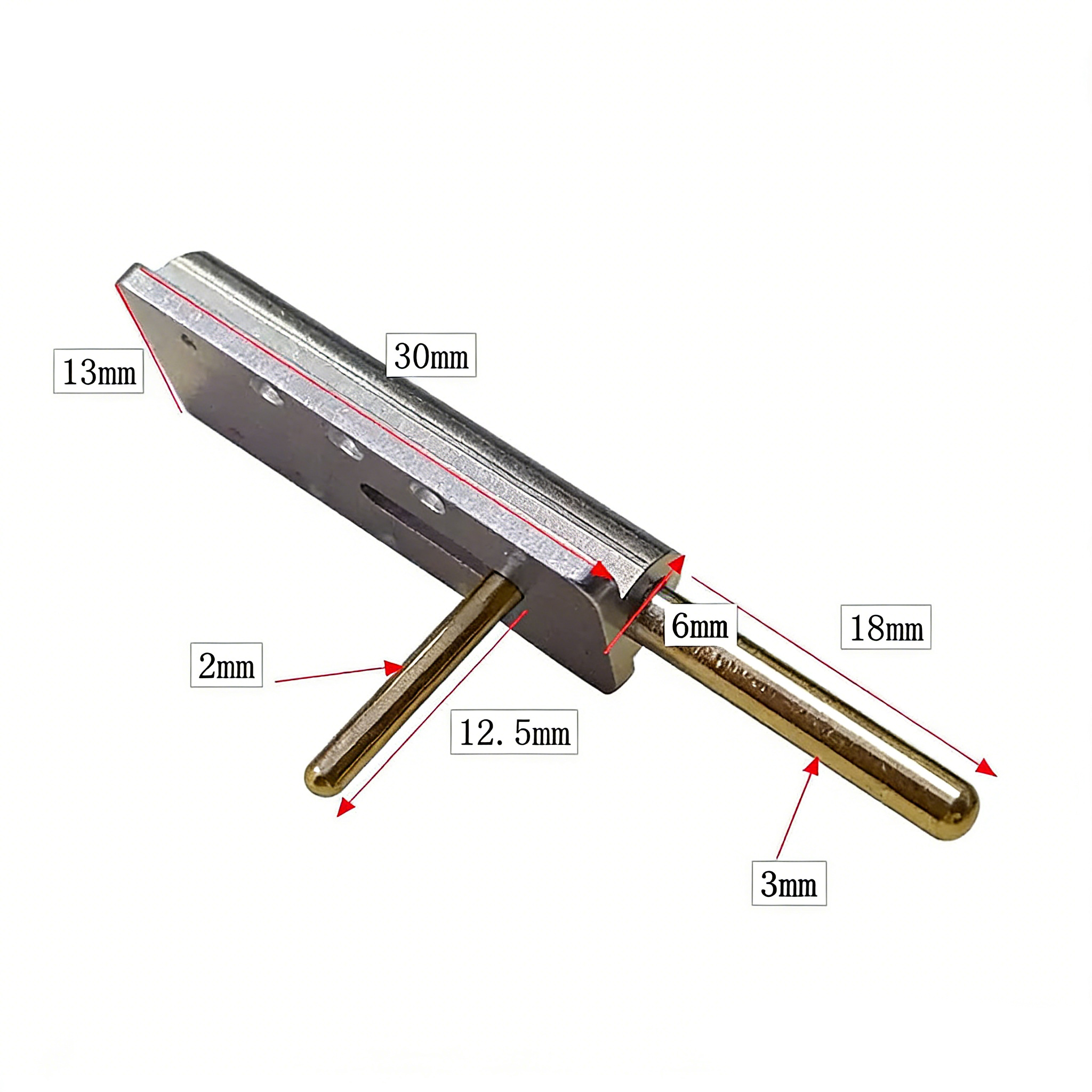
The 1 PC Aluminum Canopy Lock L30 mm is a straight, machined aluminum catch that holds a canopy, hatch or equipment cover closed on an RC model. The body measures 30 mm long, 13 mm wide and 6 mm deep and carries a Ø3 mm hole for the bolt or pin that locks the panel down. That hole is the dimension to check first — it suits airframes already built around 3 mm hardware rather than the thinner fittings used on some small foam planes.
The finish is a plain silver, and the pack holds a single lock. It is a straight block rather than an angled bracket, which makes it the natural choice when the canopy line runs flat across the fuselage and there is no inside corner for an angled body to sit in.
Fitting is a bench job. Line the lock up on the hatch, check that the pin passes through cleanly, and screw the body down after a dry fit. Once it is on, there is nothing to adjust or lubricate.
Hobby shops, repair benches and drone builders buy rc airplane parts like this one in singles, then repeat the same size once it has proved itself. This lock sits in the retracts and undercarriages part of our rc plane parts range, so it can travel in the same order as hinges, screws, wheel hardware and fittings.
Key Features
- Solid aluminum body — the lock is cut from metal rather than moulded, so it keeps its shape when a hatch is opened and closed hundreds of times and does not deform around a screw that has been tightened once too often.
- Compact straight block, 30 × 13 × 6 mm — short enough to sit on a narrow hatch lip, with enough body depth for the fixing screws to bite into metal rather than into a thin moulding.
- Ø3 mm hole through the body — the lock closes over a 3 mm bolt or pin, which matches the pin already fitted on most 3 mm hatch setups. Measure your pin before ordering.
- Silver finish — a neutral metal tone that sits quietly under a clear canopy and needs no touch-up work.
- Order exactly what you need — supplied as a single unit, which suits the way most people buy model aircraft parts: one item to finish the model on the bench.
- Repeatable size — body length, width and hole stay the same from order to order, which is what you want from rc airplane accessories that get reordered as they wear out.
Specifications
| Product type |
Aluminum canopy lock, straight body |
| Material |
Aluminum |
| Colour |
Silver |
| Body size |
L30 × W13 × H6 mm |
| Bolt / pin hole |
Ø3 mm |
| Body shape |
Straight, symmetrical block |
| Fixings |
Drilled holes through the body for small screws |
| Pack quantity |
1 piece |
| Range |
Retracts and undercarriages |
| Measurement note |
Dimensions are taken by hand, so allow for slight variation |
Mounting & Hole Layout
Match the hole to your pin. This lock closes over a Ø3 mm bolt or pin, so measure the pin diameter on your hatch before you order. A 2 mm pin sits loose inside a 3 mm hole, and a loose pin is what lets a canopy panel shift in flight.
Where the fixing screws go. The body is drilled for small screws. Fix it into the hatch frame or a small ply doubler rather than relying on adhesive alone — the screws should carry the load, not the glue line or the foam behind it.
Left or right, same part. There is no handed version to choose. The straight body fits either side of the fuselage, so one spare covers both positions and there is no second part number to keep in the drawer.
Alignment. Set the rc plane canopy latch in place with the pin through the hole and the hatch held shut by hand, then mark the fixing positions. Any adjustment belongs in the mounting position, not in the body.
Check the pin length. A pin that is too short to clear the far face of the body will not lock reliably, so test the closed hatch by hand before you drill anything.
Airframe Suitability
- F3A and precision aerobatic models — this lock is ideal for F3A aircraft, where a long, clean canopy line benefits from a compact metal catch that will not flex.
- Drones — the same body is noted as ideal for drones, and suits hatches, equipment covers and camera bay doors.
- Other airplane models — the lock can also be used on other models; just take its weight into account. If you buy model aircraft parts for a small indoor airframe, a moulded latch is usually the lighter route.
- Larger glow and gas models — a metal body takes field handling and repeated hatch opening far better than a moulded catch.
- Airframes built around 3 mm hardware — it follows the same Ø3 mm logic as the hinge plates, screws and fittings in our rc airplane accessories range, so you are not introducing a new fixing size.
- Hobby models only — these are modelling components without load ratings or airworthiness documentation, and they are not intended for manned or commercial aircraft.
Lock Type Comparison
| What to compare |
This L30 aluminum canopy lock |
Right-angle aluminum lock |
30 mm moulded latch |
| Body shape |
Straight block |
Right angle |
Straight, moulded |
| Material |
Aluminum |
Aluminum |
Moulded |
| Body size |
L30 × W13 × H6 mm |
L26 × W16 × H8 mm |
L30 × W12.5 × H6 mm |
| Hole |
Ø3 mm |
Ø3 mm |
Ø3 mm |
| Colour |
Silver |
Silver |
White or black |
| Pack quantity |
1 piece |
1 piece |
5 pieces |
| Fits where |
The hatch line runs flat |
The hatch closes into a corner |
A light latch and a colour match are wanted |
| Typical order |
A single position or one spare |
A corner position |
A short repair run or a stock pack |
Installation Steps
- Dry-fit the body against the hatch line and check the rc plane canopy latch closes without forcing the panel.
- Choose fixing screws that bite into the frame but stop short of the hatch interior, so nothing protrudes inside the fuselage.
- Tighten the fixings gradually, alternating across the body, so the lock does not drift out of position as the last screw goes home.
- If a servo drives the hatch, cycle it through its full travel and check that the arm, clevis and pushrod clear the body.
- Close the hatch and check that the panel line is flush. If it is not, loosen the fixings and re-set the lock rather than bending the body.
- Wipe fuel residue and dust off the body after a flying session. No lubrication or adjustment is needed — there is no mechanism inside the lock to wear.
Spares and Repeat Orders
One lock covers one canopy or hatch position, so the part you need for a repair is the part in the bag. Nothing else is included — the screws and the pin come from your own hatch hardware, or from the fasteners elsewhere in our range.
Most builders order the lock they need today and a second one for the field box. A lock that has been knocked off in a landing or lost in long grass is a straight swap: undo the fixings, seat the new body, close the hatch. That is a job worth finishing at the field rather than at the bench.
For shops, clubs and repair benches, the useful habit is to keep small rc airplane accessories like this on the shelf in one known size. Write the body length and hole size on the bag before it goes in the drawer — a 30 mm body and a 26 mm body look almost identical in the hand.
Shops that buy rc airplane parts for stock will find the size, colour and finish stable from order to order, so a repeat order matches whatever is already on a model or on the shelf. If you are fitting out several models, count the hatch positions first and order that number; keeping rc plane parts to one known specification is what makes a spares drawer worth having.
Ordering & Delivery
- Order in any quantity — buy rc airplane parts piece by piece. A single lock can be ordered on its own, or added to a mixed order alongside hinges, screws, engine mounts, exhaust deflectors, tube benders and the rest of the range.
- Tell us the quantity — one lock for a repair, a handful for a club fleet, or a larger rc plane parts order for the shop. Send the number you need and we will confirm availability.
- Order handling — orders are processed within 24-48 hours. If you buy model aircraft parts for a build that is already on the bench, tell us the date you need it and we will flag anything that has to be checked first.
- Packing — small hardware is bagged so the count is easy to check on arrival and nothing escapes in transit.
- Regular stock — dealers, clubs and workshops can set up repeat orders of the same size and finish, so the same part keeps arriving without a fresh check every time.
- Not sure which lock suits your model? Send a photo of the hatch or the diameter of your pin and we will confirm the right one before you place the order.
Scale & Supply Capability
Compo RC is part of Haoye Model, working in RC accessories since 1999 — 25+ years of experience, an ISO 9001 certification dating back to 2002, and 1,200+ dedicated moulds behind the range. A 6,000 m² production base and a catalogue of 3,000+ items mean you can source the many small parts a build needs from one place. Need a size we don't list? Send your drawing and we'll make it to your specification. Unsure whether something will suit your build? Our team will help you check before you order.
FAQ
Q1. What size is this canopy lock, and what bolt does it take?
The body measures L30 × W13 × H6 mm, and the hole through it is Ø3 mm, so it takes a 3 mm bolt or pin. Check the pin diameter on your hatch before ordering — a 2 mm pin would sit loose in a 3 mm hole.
Q2. Is the body aluminum or moulded?
It is aluminum, finished in plain silver. The moulded latches in the same nominal size are a different part — lighter and supplied in multi-packs — while this is a machined metal body sold as a single piece. Where a hatch line takes knocks and a moulded catch keeps loosening, this rc plane canopy latch is the one that holds its shape.
Q3. Can I use it on models other than F3A?
Yes. It is ideal for F3A aircraft and drones, and it can also be used on other airplane models — just take the weight into account. On a small indoor foam model the extra weight of a metal body matters more than the strength it adds, so a moulded latch is often the better choice there.
Q4. What is in the pack?
One canopy lock, packed on its own — that is the whole contents list. There are no screws, no bolts, no pin or retaining clip, and no instruction sheet in the bag, so the packet holds the part and nothing else.
It ships as a bare single unit for a practical reason. Most people buy a lock like this to replace one that has worn or broken on a hatch that is already built, and the fixings on that hatch are usually still there and still usable. Sending a bag of generic screws would only add cost and leave you holding hardware that may not match the thread your airframe was assembled with.
Before you order, look at what holds your hatch closed now. If the bolt or pin and its screws can be reused, the lock on its own is all you need. If they are worn, missing, or you simply do not want to undo the old ones twice, add the right fixings to the same order so everything arrives in one parcel instead of leaving you waiting on a second delivery for one small screw.
One point on quantity: this is a single lock, not a pair, and there is no left-hand or right-hand version to choose between. A hatch held down at two points needs two pieces, so count the latches your model needs rather than the number of models you are working on. Anyone ordering for a repair bench or a shop shelf should decide the quantity up front, and buyers who want a different pack arrangement for retail can ask us about it before ordering.
The lock travels in a small protective sleeve so the finish arrives unmarked, and the loose part stays with it inside the parcel. Leave it wrapped until you are ready to fit it, and check the contents as soon as the parcel lands — if the count does not match what you ordered, tell us before you start work on the model.
Finally, keep it in perspective: the fixings are the only thing you may need to add, and everything else for a canopy lock installation is already on your bench.
Q5. Will it hold up on a nitro or gas model?
The lock is a single aluminum body with no soft parts and no mechanism to wear, so the power system does not change how it works. On a vibrating airframe, check the mounting screws after the first few flights — vibration loosens screws long before it damages this kind of hardware.
Q6. The hole does not line up with my existing pin — what should I do?
Move the lock's mounting position rather than opening up the body. The hole is fixed at Ø3 mm, and an enlarged hole lets the pin move inside it, which is what makes a hatch work loose.