EN

Introduction: Control horn hole choice is a small setup detail that changes aileron travel, servo load, and the sensitivity a pilot feels at the sticks.
Aileron travel can feel mysterious until you look at the linkage as a simple lever. The same servo, the same pushrod, and the same aileron can behave like two different airplanes just because the pushrod sits in a different hole. Builders often notice this when a model rolls faster than expected, feels twitchy near center, or seems to run out of aileron throw on landing. Understanding hole position helps you predict those changes instead of guessing.
Pushrod geometry is easier to understand when you stop thinking about the radio and look at the horn as a lever. The aileron hinge line is the pivot. The hole that holds the pushrod is the point where force enters the surface. The distance from the hinge line to that hole is the lever arm. When the servo moves, it sends force through the pushrod. That force acts at the chosen hole and creates a moment that rotates the aileron. A longer lever arm gives the pushrod more leverage, so the same pushrod force produces more torque on the surface. A shorter lever arm gives less leverage but turns a small pushrod movement into a larger surface angle. Mechanical advantage is the tradeoff in plain language. A long lever arm lets the linkage move a load with less force, which is easier on the servo and on the pushrod. In aileron setup, the outer hole usually acts as the longer lever arm. It reduces strain on the servo and can make the linkage feel more solid, but it also reduces total aileron travel. The inner hole acts as a shorter lever arm. It increases travel and quickens the response, but it asks the servo to work harder for the same surface load. On a light foam model, that extra load is often modest, but a stiff hinge or a binding pushrod can quickly change the picture. Servo resolution works on the same lever. A servo moves in small steps, and those steps become pushrod travel. At the control horn, pushrod travel becomes angular movement. A longer lever arm makes each step produce a smaller surface angle, so the pilot gets finer control and a smoother feel near center. A shorter lever arm makes each step produce a larger surface angle, so the model feels more responsive but less precise. The linkage is always balancing forces and moments, so changing the hole position changes how much force each part carries and how much movement reaches the aileron.
Once the lever idea is clear, the practical changes are easy to predict. Moving the pushrod from one hole to another does not change the servo's rated torque or the radio's endpoint setting. It changes the mechanical relationship between the servo and the aileron. The biggest effects appear in force transfer, travel, and control feel.
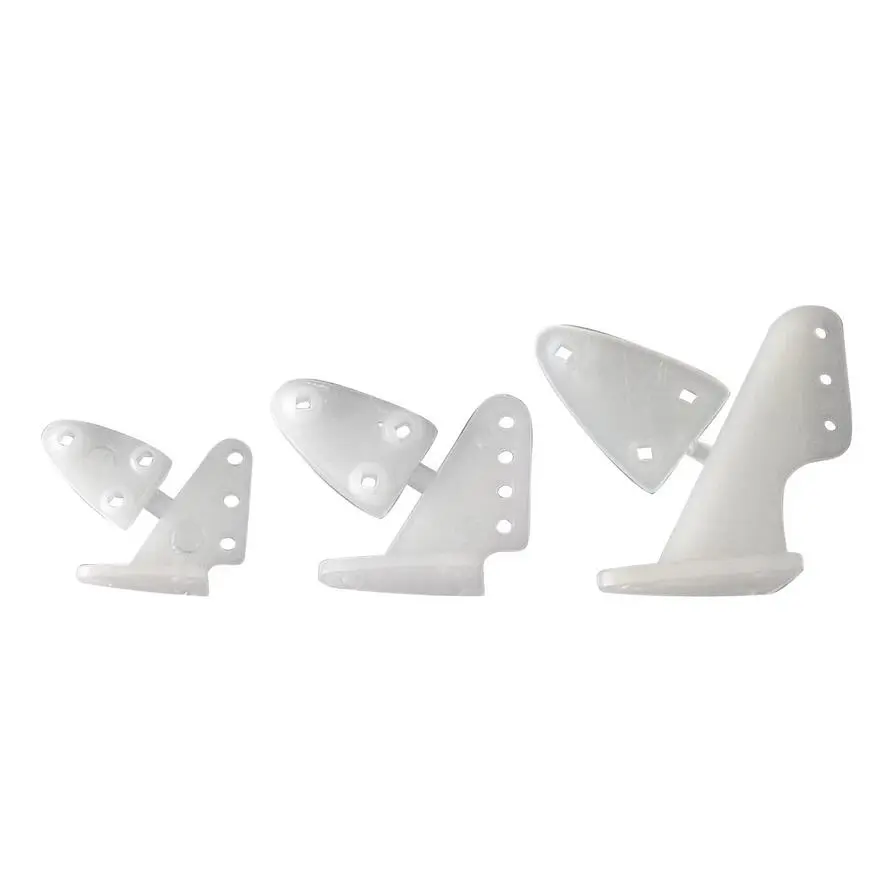
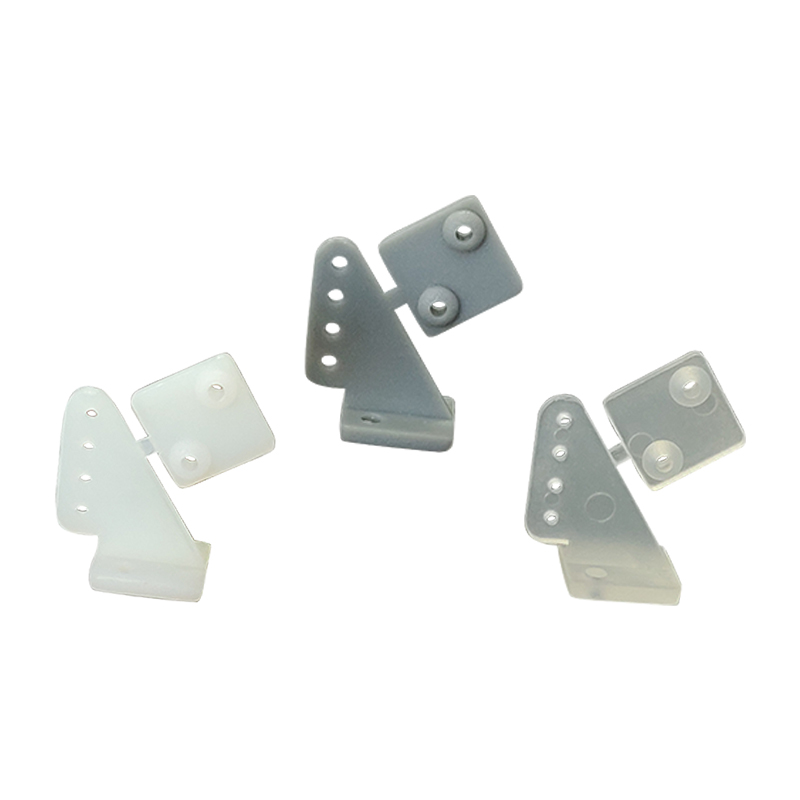
A 4-hole horn is not automatically finer than a 3-hole horn. The extra hole can provide an additional position, which is useful when the inner and outer choices feel too far apart. The actual result still depends on where each hole sits relative to the hinge line, how long the servo arm is, and how freely the pushrod moves. Exact feel also depends on servo travel, model weight, and pushrod geometry.
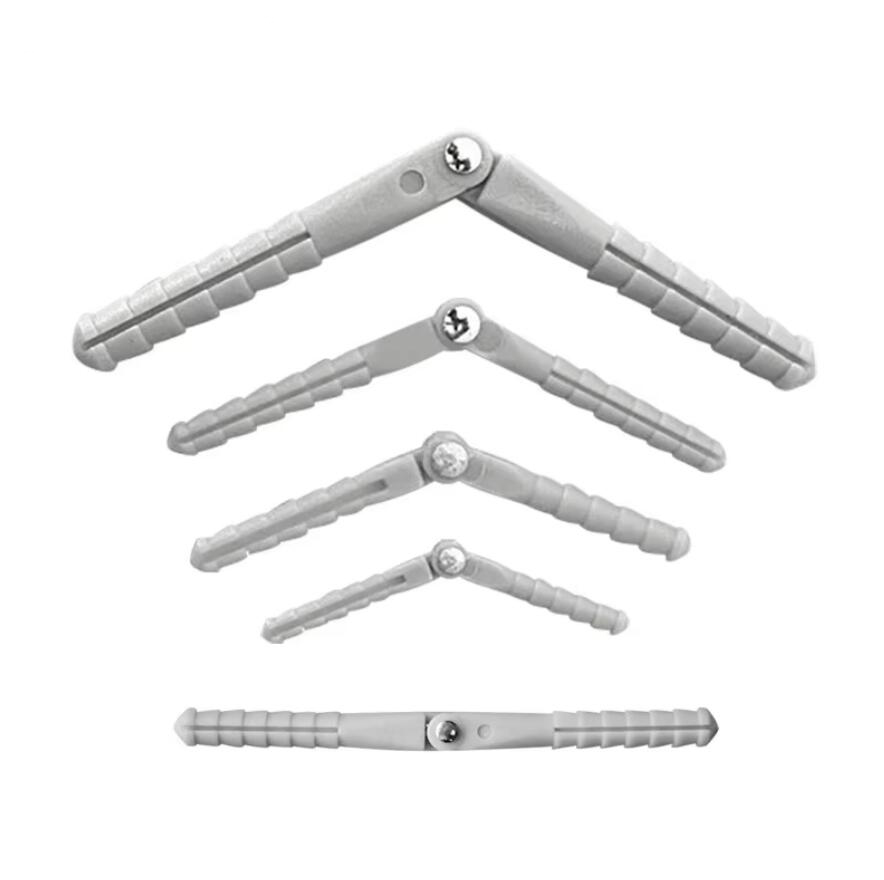
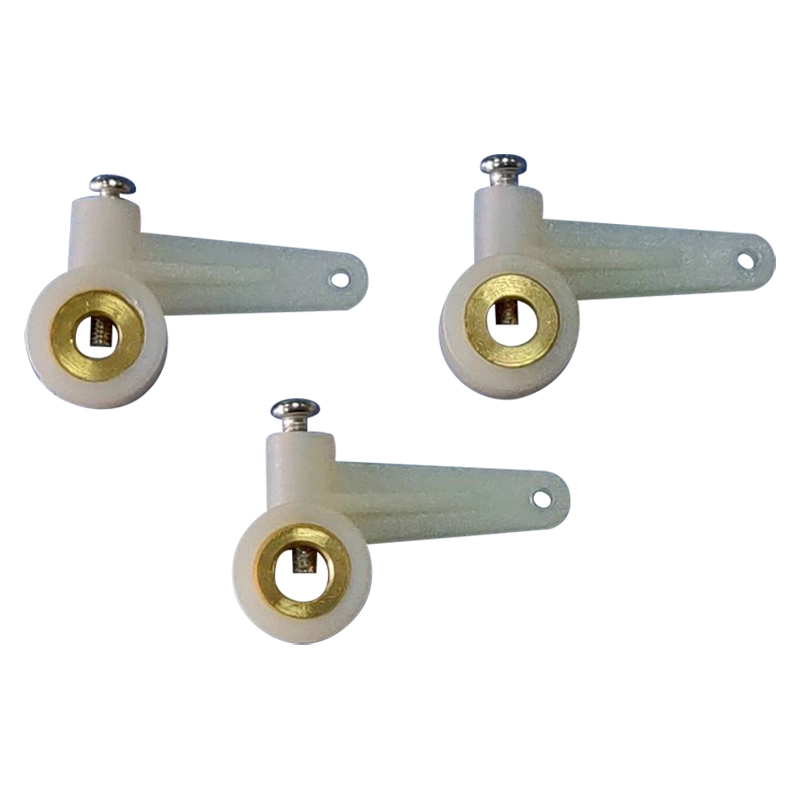
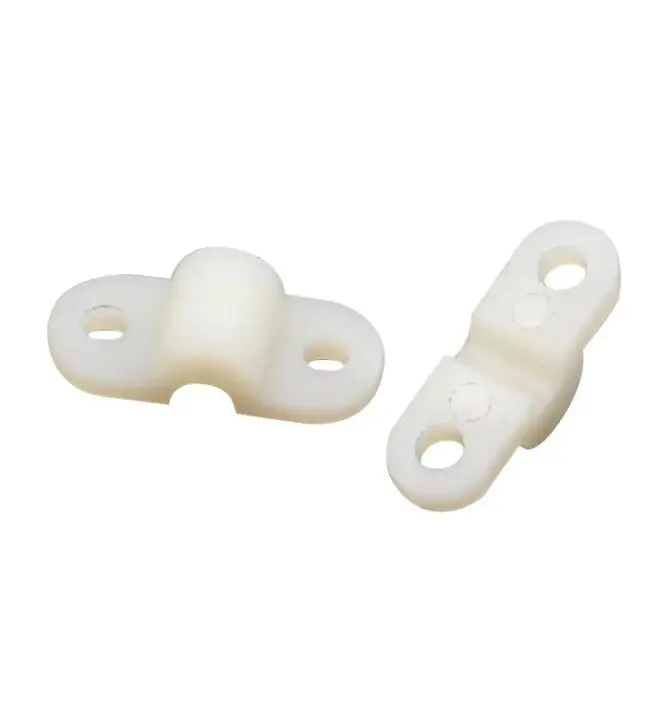
On small electric fixed-wing and foam models, aileron surfaces are light and the linkage is short. That makes hole position easy to feel in flight. A trainer or scale model often feels better with the pushrod in an outer hole: roll response is gentler, center feel is smoother, and small servos are not asked to fight the surface. A sport model that needs a faster roll rate can use an inner hole, accepting more servo load and a less delicate center. The 4-hole M variant adds a middle position, which can be a useful compromise between those two extremes. The 3-hole S and L variants keep the choice simpler. Compo RC lists these as a 10-piece pack for aileron and elevator connections on small electric fixed-wing and foam models, with S and L using three holes and M using four. The useful way to match a horn to control feel is to decide what the model needs before moving the pushrod. If the ailerons feel too sharp near center, if the servo buzzes under load, or if the model rolls faster than the pilot wants, move the pushrod outward. If the roll rate feels flat, if the ailerons run out of travel, or if the model needs a quicker response, move inward. After any change, check that the pushrod does not bind, that the aileron moves freely, and that both ailerons travel the same amount. A 3-hole horn can cover most small electric and foam setups. A 4-hole horn simply gives one more position to fine-tune the feel without changing the radio.
Hole position is a lever choice, not a mysterious radio setting. The inner hole shortens the lever arm, increases aileron travel, and makes the servo work harder. The outer hole lengthens the lever arm, reduces travel, and gives finer, smoother control near center. A 3-hole horn and a 4-hole horn follow the same mechanics; the 4-hole version mainly adds another position. On small electric fixed-wing and foam models, the best result comes from testing the linkage, watching for binding, and matching the feel to the way the model is flown. Builders who want to see the listed variants can review the product facts in Related Examples.
A:The inner hole, closest to the hinge line, gives more aileron travel for the same pushrod movement. It shortens the lever arm, so a fixed amount of pushrod travel turns into a larger surface angle. The outer hole does the opposite: it reduces travel and gives the servo more mechanical advantage.
A:No. Finer control comes from the distance between the chosen hole and the hinge line, plus the servo arm and pushrod geometry. A 4-hole horn may offer an extra intermediate position, which can help tuning, but a 3-hole horn set in an outer hole can already feel very fine. Hole count alone does not decide the result.
A:Yes. Moving the pushrod inward increases aileron travel, while moving it outward reduces travel. The same change also affects servo load and control resolution. Make the change in small steps, check for binding, and confirm that both ailerons still move equally.
12.1 Conditions for Static Equilibrium - University Physics Volume 1 | OpenStax
10 Pcs Nylon Pin Horn Zip Horns Without Screws 3 Hole 4 Hole RC Airplanes Parts
Copyright © 2005-2026 MySite Ltd. All Rights Reserved. POWERED BY UEESHOP